
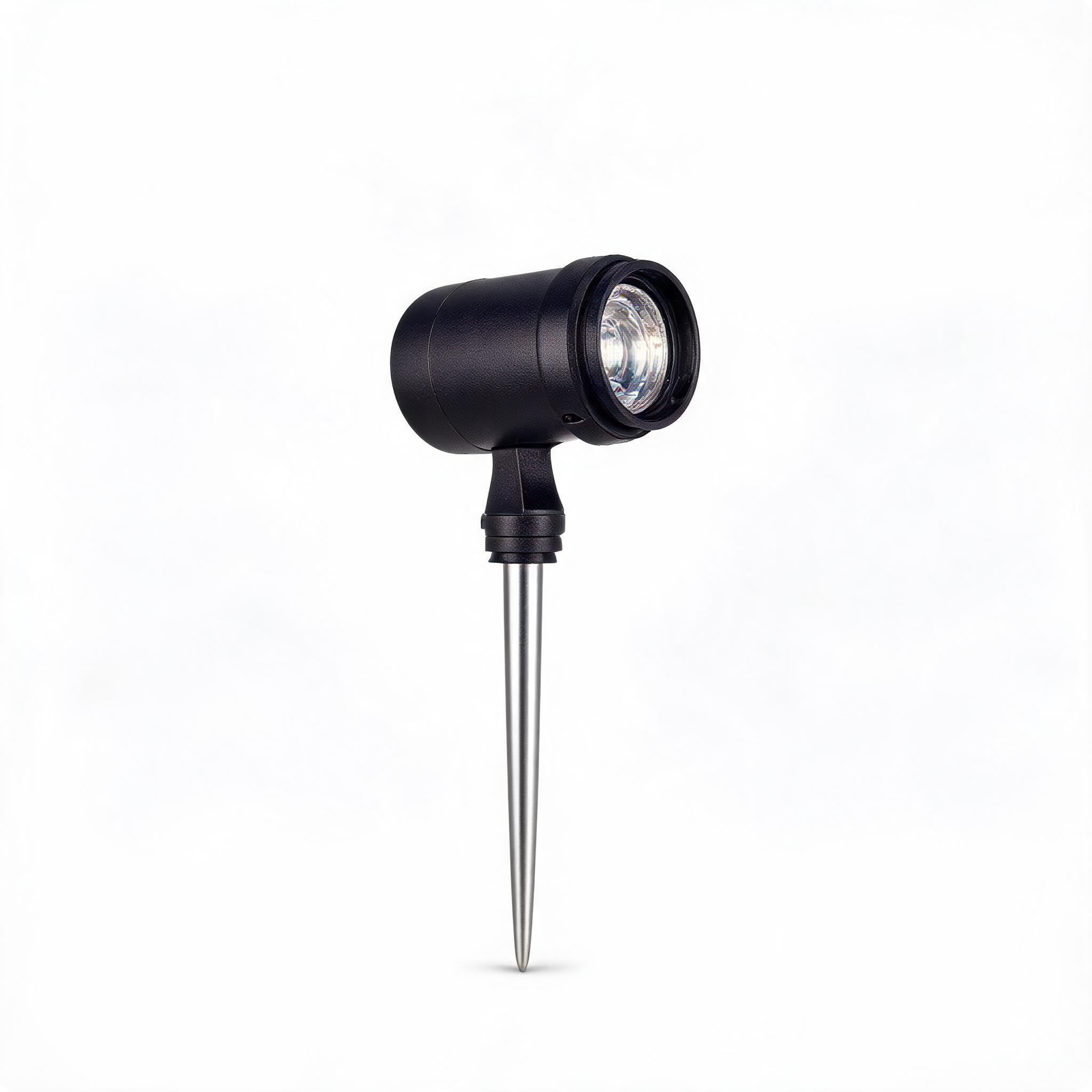
A structured buyer's guide to choosing landscape lighting: matching fixture types to lighting tasks, comparing materials and IP ratings, and evaluating manufacturers on the specs that matter.
Start with the Lighting Task, Not the Fixture
The most common mistake in landscape lighting procurement is shopping by fixture category instead of by lighting task. Before comparing products, write down what each area of the project actually needs: accent a tree, define a pathway, wash a wall, light a step, or secure a perimeter. Each task maps to a specific fixture type, and once the mapping is clear, choosing products becomes straightforward.
- Accent and uplighting: Spotlights with adjustable beam angles. Narrow 15°–24° beams for tall palms and columns; wider 38°–60° beams for shrubs and facades.
- Pathway definition: Bollard lights or path lights at 40–60cm height, spaced 2.5–3 meters apart.
- Wall washing: Linear wall washers or wide-beam floods placed close to the surface.
- Step and deck safety: Recessed step lights with louvered or frosted lenses to prevent glare.
- Water features: Submersible IP68 fixtures only — never compromise on this rating.
Match Wattage and Lumens to the Scene
Wattage tells you the energy draw; lumens tell you the light. In LED fixtures the two are related but not identical, and buyers should always compare lumens. As a working rule: garden accents need 100–300 lumens, pathway lighting 100–200 lumens per fixture, tree uplighting 300–800 lumens depending on canopy size, and large facade or security applications 2,000+ lumens.
OKELI's spotlight range illustrates the ladder clearly: the 10W spotlight delivers 800lm for garden accents, the 20W version reaches 1600lm for medium trees and walls, and the 50W commercial unit produces 4000lm for large-scale accent and security work. Choosing by lumens per task prevents both under-lighting and the glare complaints that come from over-lighting.
Beam Angle: The Spec Most Buyers Ignore
Beam angle determines whether light lands as a controlled accent or a washed-out blob. Adjustable fixtures (15°–60°) solve this elegantly because one SKU serves multiple scenes — a major advantage for distributors who want to stock fewer variants. Fixed-beam fixtures cost slightly less but lock you into one effect. For project work, adjustable beam is almost always the better specification, and we explain the full logic in our guide to choosing beam angles for LED landscape spotlights.
Material and Finish: What Survives Outdoors
Outdoor fixtures fail from corrosion and water ingress far more often than from LED failure. Material choice is therefore a durability decision, not an aesthetic one:
- Die-cast aluminum with powder coating: The standard for spotlights and floods. Strong, thermally efficient, and corrosion-resistant when properly coated.
- 304 stainless steel: Excellent for bollards and path lights in most climates. Our 40cm stainless bollard uses 304 throughout for exactly this reason.
- 316 stainless steel: Required for coastal installations and inground fixtures exposed to de-icing salts. The 9W inground uplight with 316 frame is specified for plazas and driveways for this reason.
- Plastic and thin sheet metal: Acceptable only for short-lifecycle or temporary installations. UV degradation and corrosion make them false economy for permanent landscapes.
IP Ratings Decoded for Buyers
IP65 means protected against water jets — adequate for most above-ground fixtures. IP67 adds protection against temporary submersion, which matters for inground fixtures, step lights in drainage zones, and any fixture at grade level. IP68 is for continuous underwater use. When a supplier quotes an IP rating, ask what it was tested against; a rating without test evidence is a claim, not a specification.
Our article on IP67 versus IP65 walks through real failure cases, including what happens when IP65 fixtures are installed at grade where irrigation soaks them nightly.
Color Temperature and CRI
For landscape work, 3000K warm white remains the default because it flatters foliage and masonry. 6500K cool white reads clinical outdoors but suits modern architectural schemes and security applications. CRI 80+ is standard; insist on it for hospitality projects where food and faces are under the light. Consistency matters too — mixing color temperatures across one property looks like a mistake even when each fixture is fine individually.
Wired, Solar or Hybrid?
Wired low-voltage systems deliver consistent output and full control but need transformers, cable and trenching. Solar fixtures eliminate trenching and electricity costs — our solar pathway light with 8–10h auto runtime is built for exactly the no-trench use case — but output depends on sun exposure and battery health. A pragmatic rule: solar for pathways, borders and remote areas; wired for uplighting, security and anything requiring high intensity.
Evaluating the Manufacturer, Not Just the Product
Two fixtures with identical spec sheets can perform completely differently over three years. When vetting a manufacturer, ask for:
- Driver and LED sourcing: Which brands? Is there a datasheet?
- Testing evidence: IP test reports, LM-80 data for the LED package, aging test records.
- OEM/ODM capability: Can they modify beam angles, cable lengths, logos and packaging?
- MOQ and lead time: Realistic numbers, not sales-floor promises.
- Warranty and claims process: Who pays freight on a warranty replacement?
OKELI LIGHTING publishes its specifications openly — for example, the 30W flood light and 100W high mast flood light pages list full optical and mechanical parameters — because we believe buyers should compare on evidence.
A Simple Selection Workflow
Put it all together in five steps: (1) list lighting tasks area by area; (2) assign lumens and beam angles per task; (3) choose material and IP rating by exposure; (4) pick color temperature for the property's character; (5) shortlist manufacturers who can document their specs. Buyers who follow this sequence consistently report fewer site failures and fewer change orders.
Frequently Asked Questions
How many lumens do I need for pathway lighting? 100–200 lumens per fixture at 2.5–3 meter spacing produces even, glare-free guidance. More is not better — overlit pathways feel institutional.
Should I buy adjustable or fixed beam spotlights? Adjustable (15°–60°) if the project has mixed scenes or if you are a distributor stocking one SKU for many jobs. Fixed beam only when the scene is known and repeated at scale.
What IP rating do inground lights need? IP67 minimum, IP68 if drainage is poor or the fixture sits in a planter that floods. Pair it with a 316 stainless frame near roads that are de-iced.
Is 3000K or 6500K better outdoors? 3000K for residential and hospitality landscapes; 6500K for modern architectural facades and security perimeters. Never mix both on one property.
What should I ask a Chinese lighting factory before ordering? Driver and LED brands, IP test reports, LM-80 data, OEM options, MOQ, lead time, and warranty freight terms. Then order a sample batch and age-test it before committing volume.
Next Steps
Once your specification is drafted, request samples of the two or three fixture types at the top of your list. Test them on site for a week — check glare from seated eye level, beam control on the actual surfaces, and heat behavior in enclosed mounting positions. Then scale the order with confidence. For a deeper cost view, read our breakdown of what landscape lighting costs in 2026, and browse the complete fixture range on the OKELI products page.