
OKELI LIGHTING CO., LTD

blog

什么是最佳太阳能庭院灯?基于组件的购买指南

2026-08-31T17:53:50+08:00

最佳太阳能庭院灯由四大组件决定:电池、太阳能板、外壳和控制。为专业买家提供评分框架、价格层级分析和总拥有成本计算。

What "Best" Means for Solar Pathway Lights

Search for the best solar pathway lights and you will find listicles ranking consumer units by price. This guide is written for a different reader: the buyer specifying lights for a property, project or product line, where "best" means lowest total cost of ownership over five years — not the lowest price on a shopping site. That definition changes the comparison completely, so let's build it from the components up.

The Four Components That Decide Quality

Every solar pathway light is an assembly of four subsystems, and the "best" unit is the one where none of them was downgraded:

  • Battery: LiFePO4 chemistry with 2000+ cycles is the commercial benchmark. NiMH is acceptable for residential; NiCd is a red flag. Replaceable packs extend fixture life from 3 years to 10.
  • Panel: Monocrystalline, sized to fully charge the battery in 6–8 hours of average sun. An undersized panel is the most common hidden defect — it deep-cycles the battery nightly and halves its life.
  • Housing: 304 stainless steel with IP67 sealing for most sites; 316 stainless for coastal and de-iced locations. Plastic housings are for temporary use only.
  • Control: Auto dusk-to-dawn photocell, so the fixture manages its own charge cycle and cannot be left on and drained.

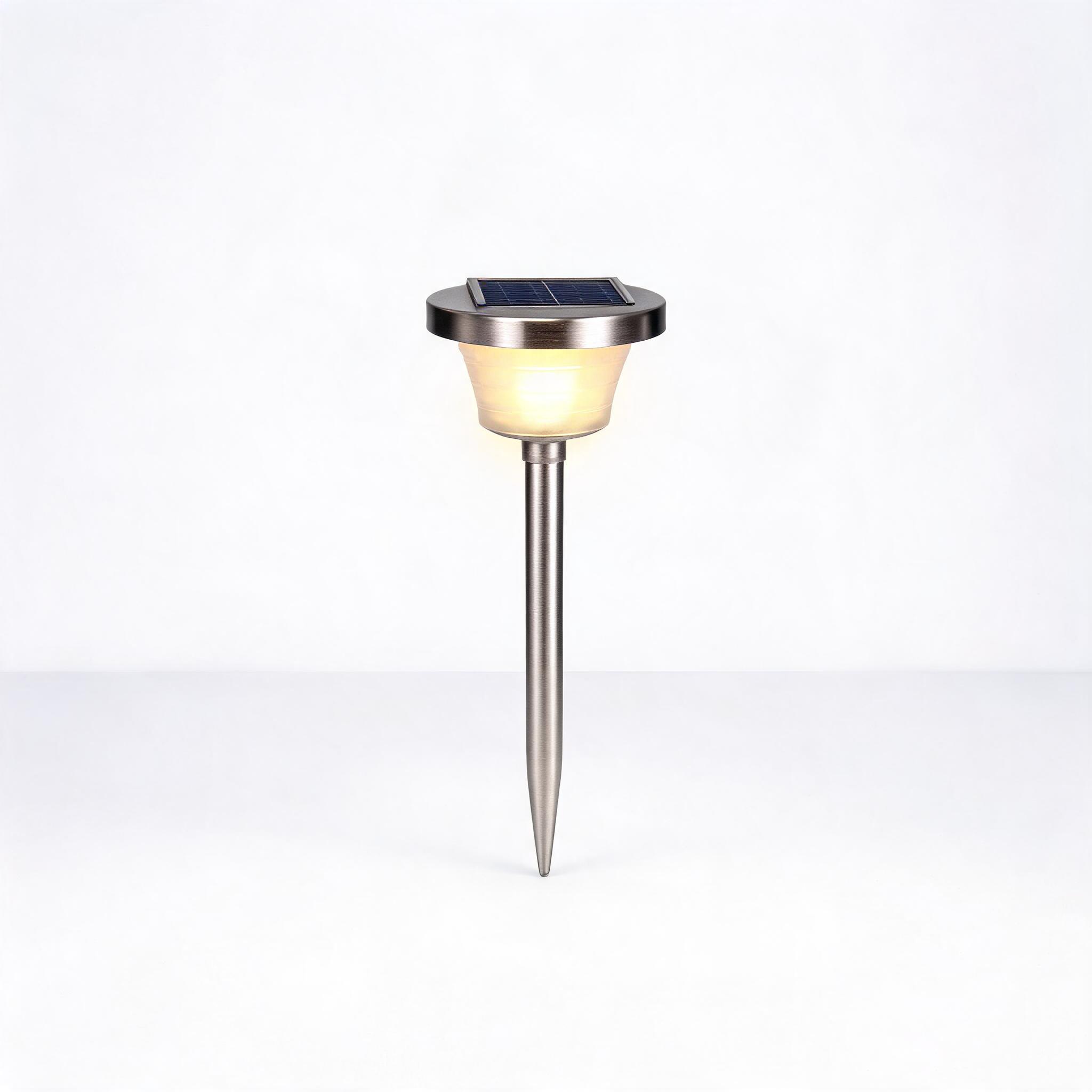
Our 304 stainless steel solar pathway light (3000K warm white) and 6500K cool white version are built to exactly this benchmark — 30cm height, IP67, auto runtime — which makes them useful reference points when comparing any supplier's claims.

Comparison Framework: How to Score Any Solar Path Light

Score each candidate fixture on six criteria, weighted for your application:

  • Battery chemistry and replaceability (30%): The first component to fail. LiFePO4 + replaceable = full marks.
  • Housing material and IP rating (25%): 304 stainless IP67 is the floor for commercial use; 316 for harsh environments.
  • Panel-to-battery sizing (15%): Ask for both specs and check they match. A supplier who publishes both is a manufacturer; one who publishes neither is a trader.
  • Light output and color temperature (15%): 100–200 lumens for pathways; 3000K for residential and hospitality, 6500K for modern schemes.
  • Runtime honesty (10%): "8–10 hours" is a realistic full-charge figure. "All night, every night" is marketing.
  • Warranty and spares (5%): 2+ years, with spare battery packs orderable separately.

Warm White vs Cool White: A Real Decision, Not a Preference

The 3000K vs 6500K choice is the one buyers deliberate over most, so let's settle it with use cases. Warm white (3000K) flatters foliage, stone and timber, and reads as hospitality — it is the default for residential gardens, hotels, restaurants and estate landscapes. Cool white (6500K) reads as modern and precise — it suits contemporary architectural schemes, security-conscious perimeters and commercial campuses. The wrong choice is mixing both on one property; the right choice is matching the property's character. Both our warm white and cool white models exist because both are legitimate specifications — the error is choosing by habit instead of by site.

Price Tiers: What You Actually Get

The market sorts into three honest tiers:

  • Under $10 (consumer/disposable): Plastic housing, NiCd battery, no replaceable parts. Fine for one-season decorative use; false economy for anything permanent.
  • $10–25 (prosumer): Mixed quality. Some units have 304 steel and NiMH; check every component — this tier contains both bargains and traps.
  • $25+ (commercial grade): Stainless housing, IP67, LiFePO4, replaceable battery, auto control. This is the tier where 5-year total cost of ownership wins, and where factory-direct sourcing matters most: buying this tier at retail prices erodes the advantage that justifies it.

Total Cost of Ownership: The Decisive Math

Compare a $9 disposable unit replaced every 18 months against a $28 commercial unit with one $4 battery swap at year three, over five years, for a 30-fixture property:

  • Disposable: 30 fixtures × $9 × 3.3 replacement cycles ≈ $890, plus three rounds of installation labor.
  • Commercial: 30 fixtures × $28 + 30 × $4 battery swap ≈ $960 — once, with one installation.

The sticker prices look similar over five years, but the commercial tier needs one installation instead of three, looks professional throughout, and never has a dark pathway. For managed properties, that settles it.

Where to Buy: Retail vs Factory Direct

For single-digit quantities, retail is fine. For anything over 50 units — HOA retrofits, hotel grounds, municipal pathways, product lines for distributors — factory direct changes the economics. A manufacturer like OKELI LIGHTING supplies the commercial tier at wholesale pricing with OEM/ODM options (custom heights, color temperatures, packaging and logos), typically 40–60% below retail equivalents. Browse the full range on the products page and compare specifications directly.

Frequently Asked Questions

What are the best solar pathway lights for commercial properties? Units with 304 stainless housing, IP67 rating, LiFePO4 replaceable battery and auto dusk-to-dawn control. Everything below that spec is a consumer product wearing a commercial price tag.

Is warm white or cool white better for solar path lights? Warm white (3000K) for residential and hospitality landscapes; cool white (6500K) for modern architectural and security schemes. Never mix both on one property.

How much should I expect to pay for quality solar path lights? $25+ per unit at retail for genuine commercial grade; substantially less at factory-direct volume pricing.

Do better solar lights really last longer? Yes — and the difference is concentrated in the battery and housing, which is why those two components carry 55% of the scoring weight in our framework.

Can I get custom specifications for a project? Manufacturers with OEM/ODM capability can adjust height, color temperature, packaging and branding. Ask early — it affects tooling and lead time.

Make Your Shortlist

Apply the six-criteria scorecard to your candidate fixtures, demand datasheets for panel and battery, and order samples of the top two before committing volume. For deeper component knowledge, read our guides on solar pathway light lifespan and choosing solar outdoor lights, and see more procurement guides in the news section.