
Oprawa bollard wyjaśniona część po części: materiały obudowy, typy optyki, strumień świetlny LED, zasilanie przewodowe vs. solarne, klasy IP i kotwienie — plus drabina specyfikacji dla typowych projektów.
Budowa oprawy oświetleniowej typu bollard
Oprawa bollard z zewnątrz wygląda prosto — słup z lampą — ale decyzje konstrukcyjne wewnątrz tego słupa decydują o tym, czy przetrwa pięć zim, czy tylko jedną. Zrozumienie budowy oprawy to krok od porównywania cen do świadomego projektowania. Oprawa bollard składa się z pięciu elementów funkcjonalnych: obudowy, układu optycznego, źródła światła, zasilacza lub baterii oraz systemu kotwienia.
Rodzaje obudów i materiały
Obudowa to pancerz oprawy. Dominują trzy rodziny materiałów:
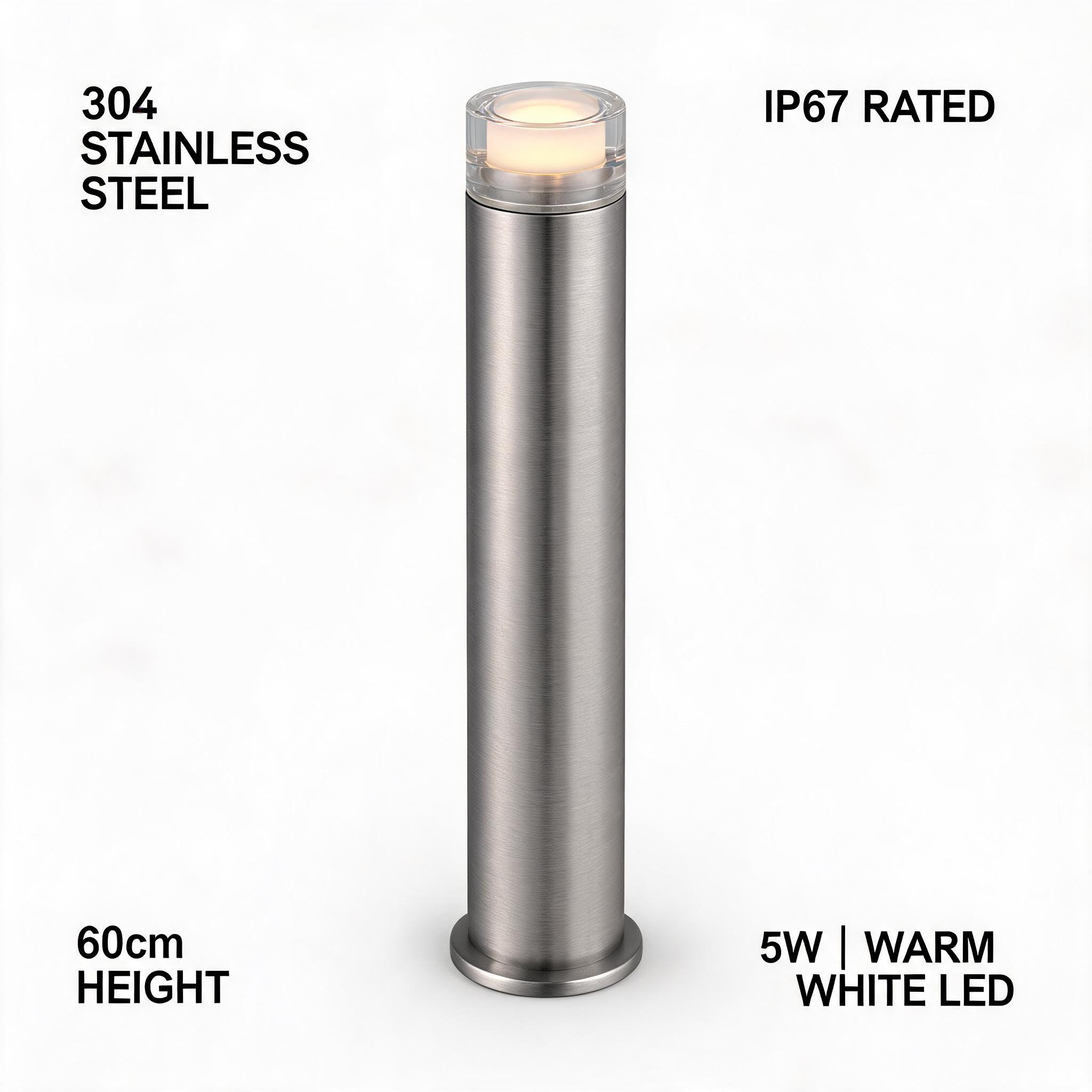
- Stal nierdzewna 304: Standard komercyjny. Odporna na korozję w większości klimatów, można ją szczotkować lub polerować na wysoki połysk, odporna na uderzenia. Nasze bollardy ze stali nierdzewnej 304 o wysokości 40 cm i wersja 60 cm wykonane są w całości z tego materiału.
- Stal nierdzewna 316: Dodatek molibdenu zapewnia odporność na chlorki. Wymagana w strefach nadmorskich, wokół basenów i wszędzie tam, gdzie stosuje się sól do odladzania.
- Aluminium odlewane ciśnieniowo lub wyciskane: Lżejsze i tańsze, malowane proszkowo na dowolny kolor. Dobre parametry, dopóki powłoka jest nienaruszona; podatne na uszkodzenia po zarysowaniu w środowisku korozyjnym.
Kształt obudowy również ma znaczenie. Głowice z lamelami ograniczają olśnienie, osłaniając źródło światła przed poziomymi liniami widzenia; konstrukcje z otwartym wierzchołkiem dają szerszy rozsył światła, ale grożą przedostawaniem się zanieczyszczeń; cylindry z mrożoną soczewką zapewniają najbardziej miękkie światło. Każdy typ znajduje zastosowanie w innym miejscu — lamelowe przy ścieżkach w pobliżu miejsc siedzących, otwarte na otwartych placach.
Układy optyczne: jak światło wydostaje się na zewnątrz
Optyka bollardów dzieli się na trzy typy:
- Światło w dół: Źródło światła skierowane jest na wewnętrzny reflektor, który odbija światło w dół i na zewnątrz — najczęstszy układ, zapewniający równomierne oświetlenie podłoża przy minimalnym olśnieniu.
- Rozsył radialny 360°: Światło wychodzi przez cały cylinder, co jest przydatne na otwartych placach, ale nieefektywne, gdy światło potrzebne jest tylko z jednej strony.
- Rozsył asymetryczny: Zaprojektowany tak, aby kierować światło głównie w stronę ścieżki — najbardziej efektywny układ dla liniowych ciągów pieszych, wart dopłaty przy długich instalacjach.
Źródło światła i strumień świetlny
Nowoczesne bollardy wykorzystują zintegrowane moduły LED o żywotności 50 000 godzin. Typowe moce: 3W / ok. 150–200 lumenów na ścieżki w ogrodach przydomowych, 5W / ok. 300 lumenów na ciągi komercyjne oraz do 10W+ na place i obwody. Temperatura barwowa to decyzja projektowa: 3000K ciepła biel podkreśla roślinność i mur; 4000K neutralna sprawia wrażenie bardziej instytucjonalnego; 6500K zimna biel pasuje do nowoczesnej architektury. Spójność na terenie nieruchomości jest ważniejsza niż pojedynczy wybór.
Zasilanie: zasilacze przewodowe vs. solarne
Bollardy przewodowe działają na niskim napięciu (12–24V) lub na napięciu sieciowym (100–277VAC). Niskie napięcie jest bezpieczniejsze w instalacji i standardem w projektach krajobrazowych; napięcie sieciowe sprawdza się w długich ciągach komercyjnych, gdzie spadek napięcia wymagałby grubego kabla. Bollardy solarne integrują panel, baterię i fotokomórkę w słupie — nasza seria solarnych lamp ścieżkowych pokazuje alternatywę bez wykopów dla modernizacji i miejsc oddalonych.
Klasy IP i uszczelnienie
IP65 to minimum dla bollardów montowanych nad ziemią; IP67 — ochrona przed krótkotrwałym zanurzeniem — to specyfikacja profesjonalna, ponieważ bollardy znajdują się dokładnie na linii gruntu, gdzie koncentruje się woda z nawadniania, topniejący śnieg i spływy powierzchniowe. Proszę żądać od dostawców dowodów z testów, a nie tylko deklarowanej klasy. Nasz przewodnik IP67 vs IP65 pokazuje, co się dzieje, gdy niższa klasa jest stosowana na poziomie gruntu.
Kotwienie: element, którego nikt nie fotografuje
Awarie bollardów są częściej mechaniczne niż elektryczne. Prawidłowa instalacja mocuje oprawę do betonowego fundamentu za pomocą kołnierza kotwiącego z gwintem lub osadzonych śrub kotwiących — a nie za pomocą szpikulca wbijanego w ziemię. Kotwa przenosi obciążenia wiatrem, kontakt z pojazdami i, co kluczowe, siłę dźwigni, gdy ktoś opiera się o słup lub go kopie. Porównując oferty, należy sprawdzić, czy elementy kotwiące są w cenie; to częste miejsce, w którym dostawcy po cichu obniżają koszty.
Drabina standardowych specyfikacji
Aby to skonkretyzować, oto jak specyfikacje układają się w typowych projektach:
- Ogród przydomowy — ścieżka: 40 cm, stal 304, 3W, 3000K, IP67, niskie napięcie lub zasilanie solarne.
- Ciąg komercyjny / wspólnota mieszkaniowa: 60 cm, stal 304, 5W, 3000K, IP67, niskie napięcie, głowica lamelowa.
- Hotelarstwo nadmorskie: 60 cm, stal 316, 5W, 3000K, IP67, optyka asymetryczna.
- Plac / obwód: 60–100 cm, stal 304/316, 5–10W, 3000–4000K, IP67, napięcie sieciowe, montaż na kołnierzu kotwiącym.
Często zadawane pytania
Jaka jest różnica między oprawą bollard a oprawą ścieżkową? Oprawy ścieżkowe to zazwyczaj ogrodowe oprawy na szpikulcu o wysokości 30–50 cm z głowicą w formie daszka; bollardy to sztywne, zakotwione słupy ze zintegrowaną optyką, zaprojektowane z myślą o trwałości komercyjnej i precyzyjnym rozsyle światła.
Jaka moc oprawy bollard jest potrzebna? 3W na ścieżki w ogrodach przydomowych, 5W na ciągi komercyjne, 5–10W na place i obwody. Należy porównywać lumeny, nie tylko waty: 100–200 lm na oprawę na ścieżki, 300 lm+ na obszary komercyjne.
Czy głowice lamelowe są lepsze? Do kontroli olśnienia w pobliżu miejsc siedzących i okien — tak. Do maksymalnego pokrycia podłoża na otwartych przestrzeniach — konstrukcje z otwartym wierzchołkiem lub z mrożoną soczewką rozprowadzają światło bardziej równomiernie.
Czy oprawy bollard można wymieniać pojedynczo? Tak — bollardy przewodowe odłącza się w puszce przyłączeniowej; jednostki solarne wyjmuje się z kotwy. Określenie wspólnego rozmiaru kotwy w całym projekcie ułatwia przyszłą wymianę.
Jaką klasę IP powinna mieć oprawa bollard? IP67 dla wszystkiego, co znajduje się na poziomie gruntu. IP65 jest dopuszczalne tylko w przypadku instalacji podwyższonych, z dobrym odprowadzeniem wody.
Porównaj rzeczywiste oprawy
Najszybszy sposób na przyswojenie tych specyfikacji to porównanie rzeczywistych stron produktów obok siebie — zobacz 40 cm i 60 cm bollardy ze stali nierdzewnej, ogrodową lampę ścieżkową 6Woraz pełną gamę na stronie produktów OKELI. Aby uzyskać wskazówki dotyczące zastosowań, przeczytaj do czego służą oprawy bollard.