
Poradnik dla kupującego: 3000K ciepła biel vs 6500K zimna biel dla reflektorów ogrodowych, słupków oświetleniowych, solarnych lamp ścieżkowych i łańcuchów LED, z oprawami OKELI, specyfikacjami i FAQ.
Ask a lighting contractor which mistake shows up most often on finished outdoor projects, and mixed color temperatures ranks near the top: a 6500K cool white path light beside a 3000K warm white bollard, on the same walkway, in the same photograph. Both fixtures may be well built, but the result reads as an accident rather than a design. This guide explains what 3000K and 6500K actually mean, where each belongs in a landscape, and how the choice plays out across the four product categories OKELI LIGHTING manufactures: landscape spotlights, bollard and post lights, solar pathway lights, and LED string lights. If you are planning a wholesale order or a multi-fixture project, the sections below give you the specification checkpoints to settle before you request a quotation.
What Color Temperature Actually Measures
Correlated color temperature (CCT), measured in kelvin (K), describes the apparent color of the light a fixture emits. Lower values shift toward amber; higher values shift toward a blue-tinged, daylight-style white. In outdoor architectural lighting, 3000K is the common warm white designation, while 6500K is a distinctly cool white.
Two practical points matter when comparing fixtures. First, CCT says nothing about brightness. A 3000K bollard rated at 500 lm will light a walkway more effectively than a cool white unit rated at 300 lm, so luminous flux must be checked separately. Second, CCT is a specification, not a promise about on-site appearance: surrounding surfaces, diffusers, and the eye's adaptation all influence how warm or cool a lit area feels. Always check a fixture's rated CCT against its product data rather than judging from photos alone.
3000K Warm White: Where It Belongs
Warm white is the default for hospitality and residential landscapes. At 3000K, foliage, timber, and stone render in a natural, evening-friendly tone, which is why this is the standard temperature for resort entrances, luxury estates, and boutique courtyards.
In the OKELI range, both bollard models ship at 3000K warm white. The 40cm low-profile bollard delivers 3W and 300 lm through a 120-degree tempered glass diffuser, sized for low garden borders, compact courtyards, and accessible pathways. The 60cm bollard steps up to 5W and 500 lm for hotel pathways, estate driveways, and commercial plazas. Both use 304 stainless steel housings, IP67 sealing, and an automatic dusk-to-dawn photosensor, and the two heights are designed to be mixed for layered path lighting.
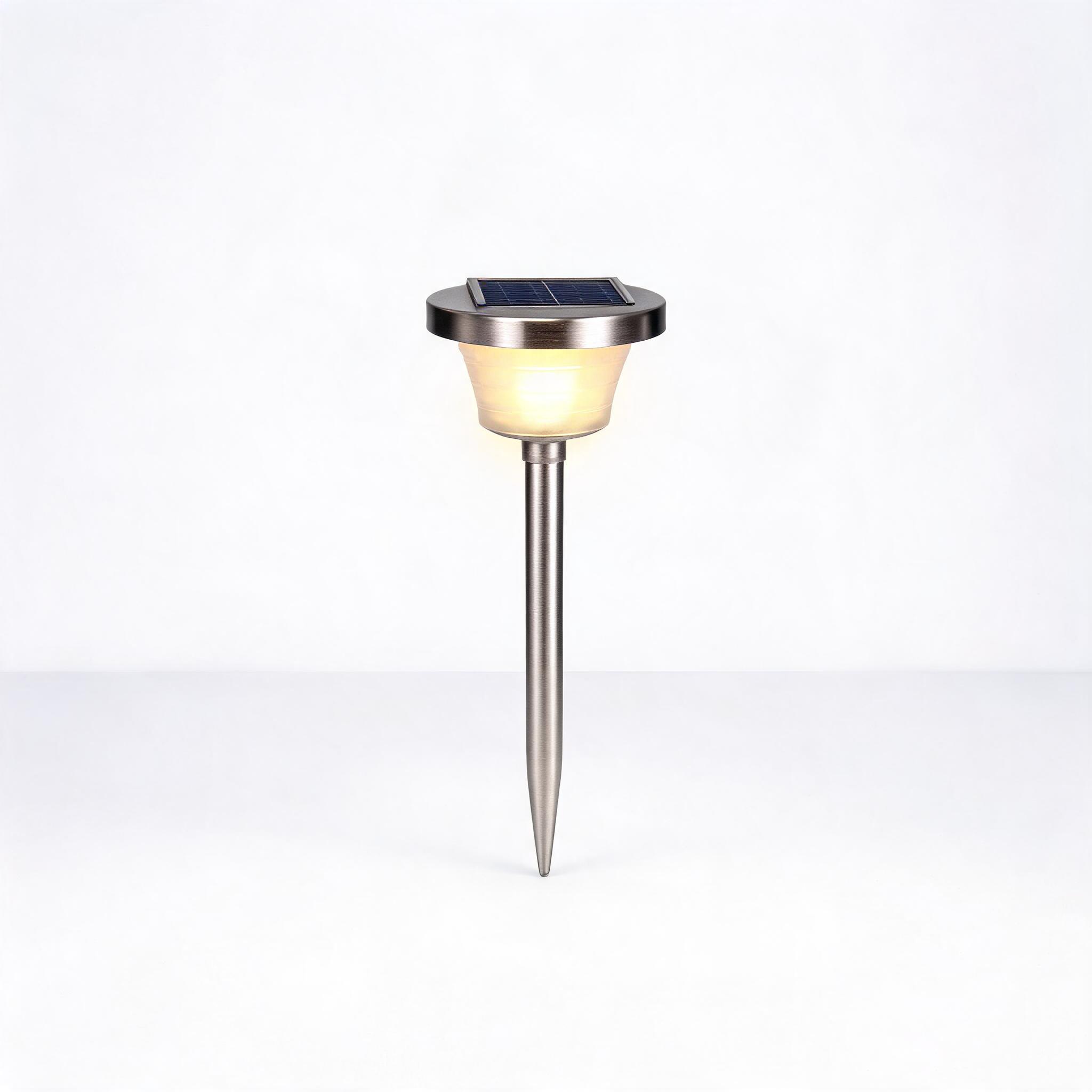
The warm white solar pathway light follows the same logic. It is a 30cm fixture in 304 stainless steel with a 600 mAh NiMH battery that delivers 8 to 10 hours of runtime per charge, sealed to IP67, switching on and off automatically with no wiring and no electrician cost. Warm white suits it because pathway edges, planting beds, and courtyard seating are viewed at close range, where cooler light can feel clinical.
6500K Cool White: Where It Works Better
Cool white has its own set of jobs. At 6500K, light reads as crisp and functional, which suits modern architectural gardens, market stalls, retail displays, and areas where a clean contemporary look or task visibility matters more than ambiance.
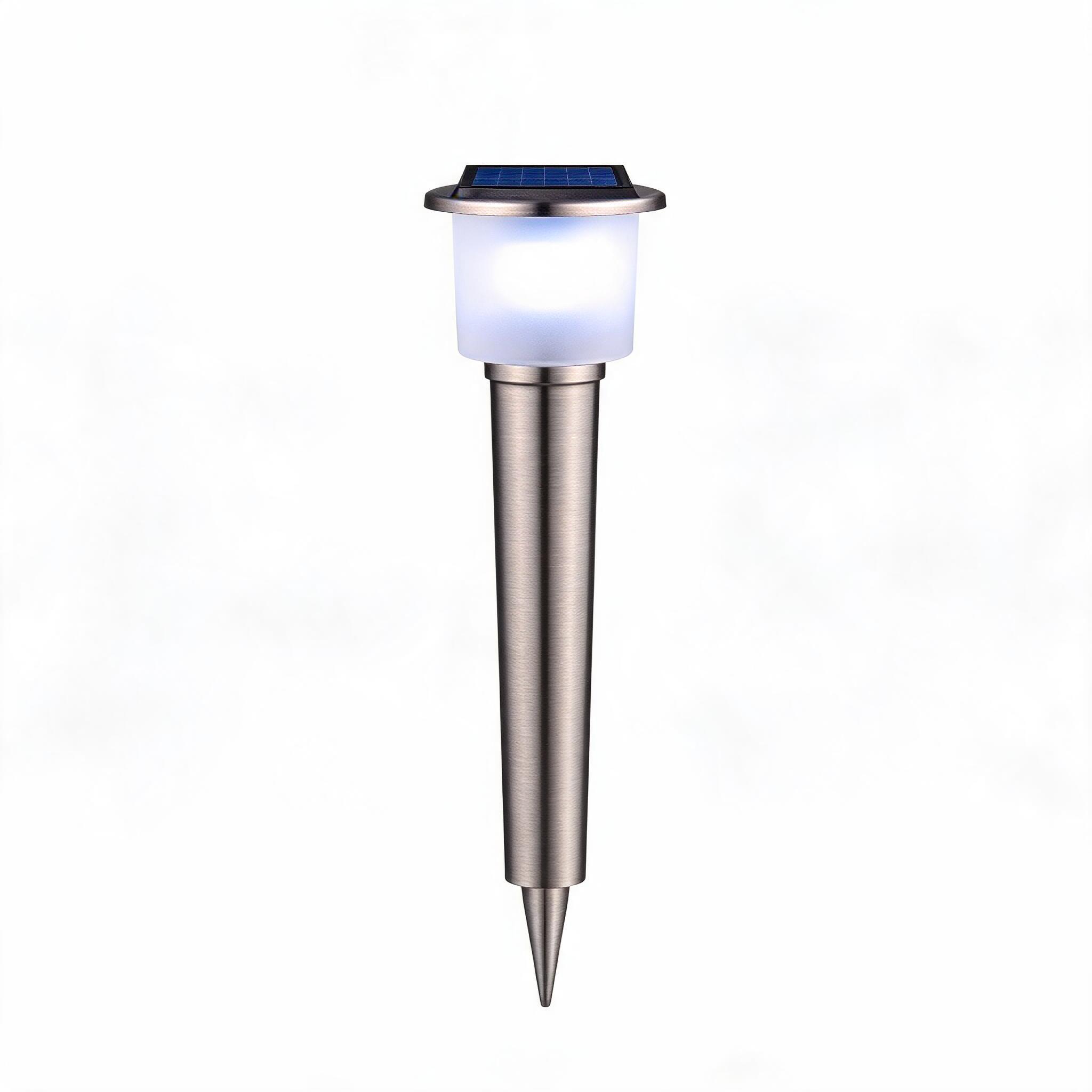
OKELI builds a matching pair for this side of the decision. The cool white solar pathway light targets modern garden designs and functional path marking, with the same 30cm 304 stainless steel body, 8 to 10 hour nightly runtime, IP67 sealing, and a rated operating range of -10°C to +50°C. The cool white LED string light carries the same intent into overhead and canopy lighting: 10 meters with 100 LEDs at 10cm spacing, 50W total, UV-resistant PVC cable, IP65 sealed connectors, built-in surge protection, 220V direct, and linkable for longer runs. It is specified for market stalls, retail displays, and modern architectural gardens, while the identical warm white version is the recommendation for dining zones. Same housing and sealing construction, different atmosphere — which is exactly why color temperature should be decided before ordering, not after installation.
3000K vs 6500K: Side by Side
| Aspect | 3000K Warm White | 6500K Cool White |
|---|---|---|
| Light character | Soft, amber-leaning white; renders warm materials naturally | Crisp, blue-leaning white; reads as clean and functional |
| Typical settings | Resort entrances, estate gardens, dining zones, boutique courtyards | Modern landscapes, market stalls, retail displays, task-focused paths |
| OKELI fixtures available | 40cm and 60cm bollards, warm white solar pathway light, warm white string light | Cool white solar pathway light, cool white string light |
| Perceived effect | Intimate and restful at close range | Alert and high-contrast; flatters hard modern surfaces |
Note that the comparison above assumes comparable lumen output. When two fixtures differ in flux as well as CCT, brightness dominates the impression, so compare lumens first and color temperature second. Spotlight models are not listed in this table because their rated color temperature is confirmed per model at order stage — see the spotlight section below.
Matching Color Temperature to Fixture Category
Landscape Spotlights
OKELI's spotlight line is organized around output and beam control: a 10W fixture at 800 lm for residential gardens and small signage, a 20W fixture at 1600 lm (80 lm/W) as the workhorse for hotel grounds and plazas, and a 50W commercial unit at 4000 lm for large-scale accent and facade work. All three use a continuously adjustable 15° to 60° beam, IP67 die-cast aluminum housings, and an integrated 220V transformer. Because spotlights are aimed upward at trees, facades, and signage, the first decisions are beam angle and mounting distance. OKELI's spotlight data lists output, beam angle and ingress protection; the rated color temperature of the chosen model is confirmed on the project schedule at order stage, so state the CCT you need when you send your inquiry. The 10W spotlight and 20W spotlight pages list the current specifications, and the 50W commercial grade covers the top of the range.
Bollard and Post Lights
Both OKELI bollards are 3000K warm white by design, with 120-degree diffused output, 304 stainless steel construction, IP67 sealing, and dusk-to-dawn operation. Choose the 40cm model where a low visual line matters — garden borders, courtyards, accessible routes — and the 60cm model where the fixture must define the path edge at standard height. Mixing the two heights on one site is supported and common in layered path design.
Solar Pathway Lights
The solar pathway category is where the 3000K versus 6500K decision is most explicit, because OKELI builds both variants on the same hardware. The shared platform is a 30cm 304 stainless steel stake light with a 600 mAh NiMH battery, 8 to 10 hours of runtime, IP67 sealing, and automatic dusk-to-dawn switching. Pick warm white for hospitality settings and warm-material landscapes; pick cool white for modern designs and functional marking. Both variants use the same hardware platform and zero wiring.
LED String Lights
The string light category mirrors the pathway pair. Both versions are 10 meters with 100 LEDs at 10cm spacing, 50W total, UV-resistant PVC cable, IP65 sealed connectors, surge protection, 220V direct, and linkable construction for permanent installations at hotels, restaurants, and retail sites. Warm white suits dining zones and gathering areas; cool white suits market stalls, retail displays, and modern architectural gardens.
Practical Notes for Multi-Category Projects
- Fix one color temperature per zone, not per fixture type. A pathway that combines bollards and solar stake lights should use 3000K throughout, or 6500K throughout, so the fixtures read as one system.
- Match the ingress protection to the mounting. OKELI's bollard and solar pathway hardware is IP67 sealed, while the string lights use IP65 sealed connectors — appropriate for open-air patios and canopies, and worth confirming against site conditions for exposed coastal or sheltered-humid installations.
- Set runtime expectations against the battery, not the fixture. The solar pathway lights deliver 8 to 10 hours per charge from a 600 mAh NiMH battery with auto dusk-to-dawn switching; wired bollards and string lights on 220V run on mains power and are not bound by that figure.
Frequently Asked Questions
Can I mix 3000K and 6500K on the same site?
Yes, but zone by zone rather than fixture by fixture. Different color temperatures are acceptable between areas that are not viewed together; within a single sightline, keep one temperature so walkways, borders, and seating read as a coherent design.
Is 6500K brighter than 3000K?
No. Brightness is measured in lumens, not kelvin. A 500 lm bollard out-lights a 300 lm fixture regardless of color temperature. Compare flux for brightness and CCT only for tone.
Which color temperature should a hotel or resort choose?
3000K warm white is the hospitality-standard temperature for resort entrances, luxury estates, and boutique courtyards, and it is the temperature across OKELI's bollard line. It also renders planting and warm materials most naturally at close viewing distances.
What color temperature do OKELI landscape spotlights use?
OKELI's spotlight specifications cover output, beam angle and ingress protection; the rated color temperature of each model is confirmed at order stage. Include the CCT you need on your project schedule or inquiry so the correct fixture configuration is matched to your order.
How long do the solar pathway lights run each night?
Both the warm white and cool white models are rated at 8 to 10 hours of runtime per charge from the 600 mAh NiMH battery, switching on and off automatically at dusk and dawn.
Can the cool white string lights be used over outdoor dining?
They can operate there — the housing and sealing construction is identical — but the warm white version is the recommendation for dining zones, because cool white reads as functional rather than inviting at seating height. Reserve 6500K string light for stalls, displays, and modern garden structures.
What should I confirm before placing a wholesale order?
Settle the color temperature per zone, the IP rating per mounting location, and the expected nightly runtime for solar items. Then contact OKELI LIGHTING with your fixture schedule so model-level data and wholesale pricing can be matched to your actual quantities.
Plan Your Lighting Project with OKELI LIGHTING
OKELI LIGHTING manufactures landscape spotlights, bollard and post lights, solar pathway lights, and LED string lights across the 3000K and 6500K options described above, supplied factory-direct for wholesale and project buyers. Browse the full catalog on the products page, follow new guides on the news page, or start from the OKELI LIGHTING homepage. To confirm color temperature, output, and configuration for a specific site, contact OKELI LIGHTING with your fixture list — the team will match model-level data and wholesale terms to your actual quantities.