
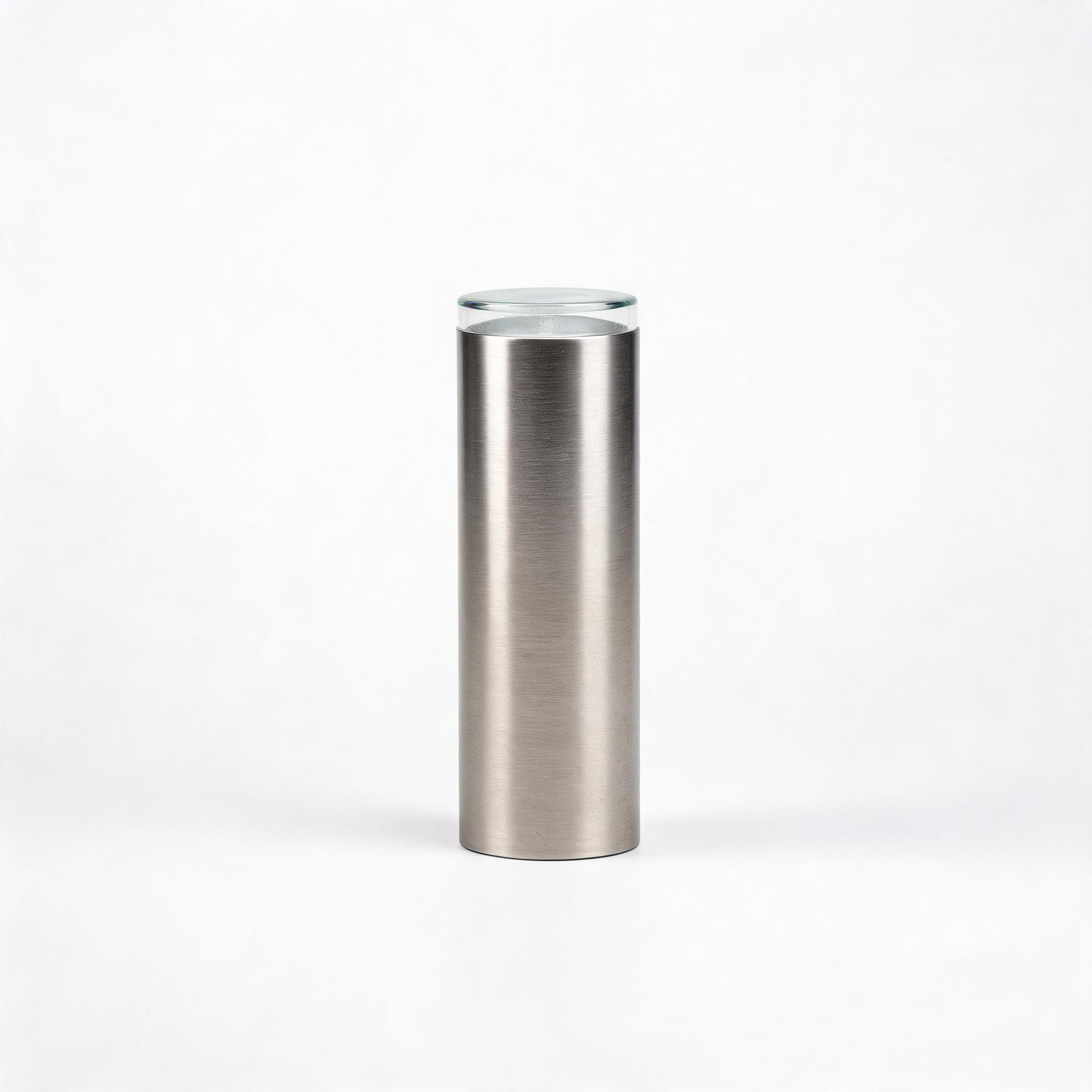
Las balizas de luz guían caminos, definen perímetros, enmarcan entradas, separan zonas de paisaje, iluminan plazas, marcan cambios de nivel y protegen áreas de estacionamiento. Aquí es donde encaja cada aplicación.
Qué es realmente una baliza de luz
Una baliza de luz es un poste vertical corto — normalmente de 40 cm a 1 metro de altura — con una fuente de luz integrada que proyecta iluminación hacia abajo y hacia afuera a nivel del suelo. El nombre proviene de las balizas marítimas, los postes gruesos a los que se amarran los barcos, y la lógica de diseño es la misma: un marcador resistente, bajo y autónomo que define un límite y soporta golpes. En términos de iluminación, la baliza ocupa el espacio entre las luces empotradas en el suelo (que desaparecen en el pavimento) y los postes de luz de altura completa (que se leen como mobiliario).
Para los compradores que especifican proyectos comerciales y residenciales, la pregunta no es solo qué es una baliza, sino dónde resulta más útil. Estas son las siete aplicaciones donde la iluminación con balizas supera consistentemente a las alternativas.
1. Guía en senderos y caminos
Este es el uso clásico. Las balizas colocadas a intervalos de 2,5 a 3 metros a lo largo de un camino proporcionan una guía uniforme a nivel bajo sin el deslumbramiento de los postes más altos. Debido a que la fuente de luz se encuentra baja y apunta hacia abajo, los ojos de los peatones permanecen adaptados a la oscuridad, algo importante en parques, complejos turísticos y comunidades residenciales donde el cielo nocturno y las vistas del paisaje forman parte del valor de la propiedad. Nuestra baliza de acero inoxidable de 40 cm es la especificación estándar para esta aplicación.
2. Definición de perímetro y límites
Una hilera continua de balizas dibuja una línea visible alrededor del borde de una propiedad, el límite de un estacionamiento o una zona ajardinada. Esto cumple una doble función: guía a vehículos y peatones, y señala dónde termina el espacio público. Los consultores de seguridad valoran el efecto: un límite iluminado disuade intrusiones casuales sin la sensación institucional de la iluminación de inundación.
3. Enmarcado de entradas y accesos
Las balizas que flanquean la entrada de un camino de acceso crean una sensación de llegada y marcan la transición de la calle a la propiedad. En propiedades hoteleras, esto es una firma de diseño; en sitios comerciales, sirve también como señalización para vehículos de reparto durante la noche. La baliza más alta de 60 cm se lee claramente desde la línea de visión de un vehículo, por lo que es la elección habitual para accesos.
4. Separación de zonas de paisaje
En jardines grandes y paisajes de campus, las balizas separan zonas funcionales: marcan el borde de un césped contra un borde plantado, o enmarcan la transición de una plaza pavimentada a un sendero de jardín. A diferencia de los focos, que crean puntos focales, las balizas crean una estructura discreta. Los arquitectos paisajistas las usan como los tipógrafos usan el espacio en blanco.
5. Iluminación ambiental en plazas y patios
En áreas pavimentadas abiertas donde las luces de poste saturarían las líneas de visión y las luces empotradas crearían deslumbramiento a la altura de los ojos sentados, las balizas proporcionan luz ambiental a nivel del suelo. Colocadas a lo largo de los bordes de las plazas y dentro de los patios, hacen que los espacios de comedor al aire libre y de reunión sean utilizables después del anochecer sin lavar la arquitectura superior.
6. Seguridad en cambios de nivel
Los escalones, muros de contención, patios hundidos y cambios de pendiente son donde ocurren los accidentes nocturnos. Las balizas colocadas en la parte superior e inferior de los cambios de nivel marcan el peligro de manera mucho más efectiva que las luces de escalón montadas en la pared, porque son visibles desde ángulos de aproximación que las luces de pared no cubren. Los proyectos municipales las especifican a lo largo de bordes de agua y pasarelas hundidas precisamente por esta razón.
7. Áreas de estacionamiento y zonas de carga
Las hileras de balizas bajas guían a los vehículos a través de los carriles de estacionamiento, marcan zonas de carga y delimitan áreas de descenso en hoteles y hospitales. Debido a que resisten el contacto menor con vehículos (una baliza adecuada está anclada, no estacada), también funcionan como protección física para áreas de jardinería y zonas peatonales.
Por qué las balizas superan a las alternativas en estos lugares
En comparación con las luces de camino montadas en postes, las balizas cuestan menos por unidad, se instalan más rápido y permanecen por debajo de las líneas de visión. En comparación con las luces empotradas en el suelo, son más fáciles de mantener (sin cortar el pavimento para el servicio) y mucho menos propensas a fallas por entrada de agua. En comparación con la iluminación de inundación, ofrecen guía sin deslumbramiento ni intrusión de luz en propiedades vecinas, un problema cada vez más regulado en municipios conscientes del cielo oscuro.
Qué especificar
Para la mayoría de los trabajos comerciales de caminos y perímetros, la especificación de trabajo es: carcasa de acero inoxidable 304, LED de 3 a 5 W a 100-200 lúmenes, sellado IP67, control automático de crepúsculo a amanecer y altura de 40 a 60 cm según los requisitos de línea de visión. Nuestra guía de materiales sobre acero inoxidable 304 vs 316 vs aluminio cubre el aspecto de la corrosión en profundidad, y nuestra guía de tipos y especificaciones de balizas desglosa las opciones de construcción.
Preguntas frecuentes
¿A qué distancia deben colocarse las balizas de luz? 2,5 a 3 metros para guía de caminos; hasta 4 a 5 metros para definición de límites donde la cobertura uniforme importa menos que una línea visible.
¿Qué altura de baliza de luz debo usar? 40 cm para senderos de jardín y entornos residenciales; 60 cm para accesos, entradas comerciales y cualquier lugar donde la luz deba leerse por encima de plantaciones bajas.
¿Las balizas de luz son lo suficientemente brillantes para iluminar un camino? Sí: 100-200 lúmenes por luminaria con el espaciado adecuado proporciona una guía uniforme. Las balizas son para guía y definición, no para iluminación de inundación.
¿Las balizas de luz pueden resistir el contacto con vehículos? Las unidades correctamente ancladas en acero inoxidable o aluminio resisten el contacto incidental; para seguridad vehicular deliberada, especifique balizas estructurales, que son una categoría de producto diferente.
¿Las balizas de luz necesitan cableado? Las balizas cableadas se conectan a circuitos de bajo voltaje o de voltaje de línea; las balizas solares eliminan el cableado por completo. Para proyectos de renovación donde el zanjeo no es práctico, la opción solar es la elección pragmática.
Ver las luminarias
Explore la gama de productos OKELI LIGHTING para especificaciones completas de balizas, o lea nuestra guía sobre cómo elegir balizas LED para caminos comerciales para detalles a nivel de adquisición. Más guías de compra están en la sección de noticias.