
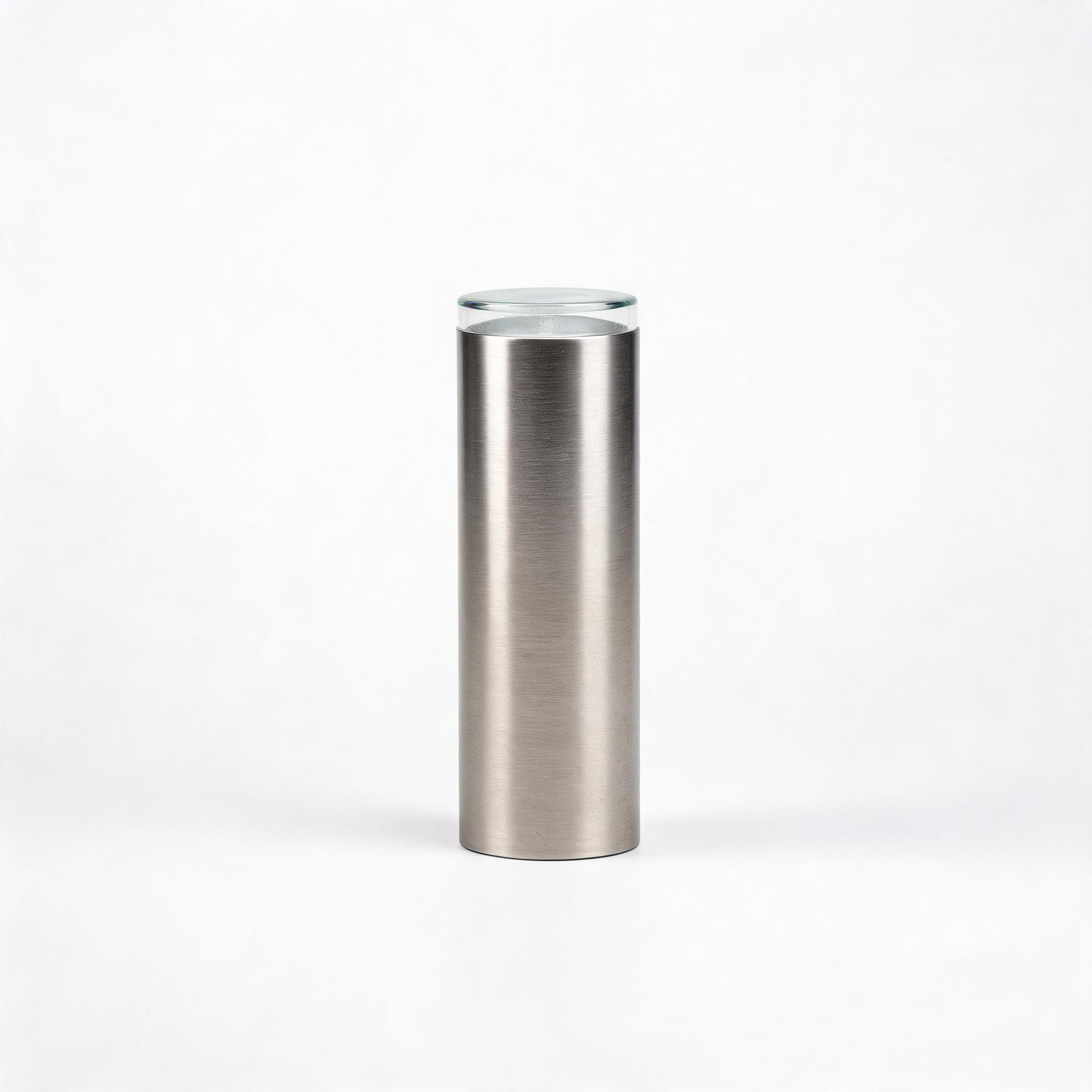
A seven-point specification guide for commercial pathway bollard lighting: material selection (304 stainless vs alternatives), IP rating, wattage matching, colour temperature, beam angle, control method, and supplier evaluation checklist.
Bollard & Pathway Lighting – Buyer's Guide;s Guide
How to Choose LED Bollard Lights for Commercial Pathways
If you are specifying pathway lighting for a hotel resort, a residential estate, a commercial plaza, or a municipal park, the bollard light is likely the most numerous fixture on your bill of materials. A mid-size resort can easily require 150 to 300 pathway bollards across its grounds, which means that every decision you make about material, wattage, IP rating, and control method is multiplied across hundreds of units. A specification error that costs €8 per fixture becomes a €2,400 problem-and a material choice that halves the replacement cycle becomes a capital expenditure item within five years.
This guide walks through the seven specification decisions that determine whether your bollard installation performs for a decade or fails within two seasons, drawing on real product data from OKELI LIGHTING's 304 stainless steel bollard path light series and the company's experience manufacturing outdoor LED fixtures since 2009.ce 2009.
What This Guide Covers
- 1. Material: Why 304 stainless steel outperforms alternatives
- 2. IP rating: What IP65, IP66, and IP67 actually mean for pathway lighting
- 3. Wattage and lumen output: Matching brightness to path width and height
- 4. Colour temperature: 3000K vs 4000K vs 6500K for commercial environments
- 5. Beam angle and optics: Glare control and light distribution
- 6. Control method: Photosensor vs timer vs smart control
- 7. Supplier evaluation: What to ask before placing a bulk order
1. Material: Why 304 Stainless Steel Outperforms Alternatives
The housing material is the single most important specification for a pathway bollard, because it determines whether the fixture survives its environment or becomes a replacement liability. Three materials dominate the market, and each has a distinct failure profile.
| Material | Typical Lifespan (Coastal) | Failure Mode | Best For |
|---|---|---|---|
| Painted Steel / Zinc Alloy | 2–3 seasons | Rust through coating, structural corrosion | Budget projects, indoor-only |
| Die-Cast Aluminum (Powder-Coat) | 5–8 years | Coating chalking, pitting in salt air | Inland commercial, moderate climates |
| 304 Stainless Steel | 10–15+ years | Minimal surface oxidation, no structural failure | Coastal, tropical, high-humidity, premium projects |
Grade 304 stainless steel contains 18% chromium and 8% nickel, which forms a passive oxide layer that self-repairs when scratched. This is the same alloy specification used in marine hardware, commercial food preparation surfaces, and architectural cladding in coastal buildings. In a pathway bollard application, it means that salt spray from oceanfront exposure, chlorine-laden air from swimming pool complexes, and the chemical content of landscape irrigation water cannot penetrate the surface to cause structural corrosion.
By contrast, painted steel and zinc-alloy housings rely on a coating for corrosion protection. Once that coating is breached-whether by a stone chip from a mower, a scratch during installation, or simple UV degradation of the paint film-the underlying metal begins to corrode. In coastal environments, visible rust appears within 6 to 12 months of a coating breach, and structural failure follows within two to three seasons. For a project with 200 bollards, that means a full replacement cycle at year three-precisely when the warranty on cheaper fixtures has expired.
OKELI's bollard path lights use full 304-grade stainless construction throughout the body, not a stainless trim over a steel core. Both the 40cm and 60cm variants share this specification, which means material performance is consistent regardless of the height you choose. For projects in confirmed marine environments, 316-grade stainless (with 2% molybdenum for enhanced chloride resistance) is available as a custom option above MOQ.MOQ.
2. IP Rating: What IP65, IP66, and IP67 Actually Mean
The IP (Ingress Protection) rating tells you exactly what the fixture can withstand in terms of dust and water exposure. For pathway bollards, this is not a theoretical concern-irrigation systems spray directly onto pathway fixtures, tropical downpours can pool water around the base, and storm drainage can temporarily submerge low-mounted lights.
| Rating | Dust | Water Protection | Pathway Relevance |
|---|---|---|---|
| IP54 | Dust-protected | Splash from any direction | Sheltered positions only; not for exposed pathways |
| IP65 | Dust-tight | Water jets (6.3mm nozzle) from any direction | Handles rain and irrigation spray; standard for general outdoor |
| IP66 | Dust-tight | Powerful water jets (12.5mm nozzle) | Handles pressure washing; good for high-traffic commercial |
| IP67 | Dust-tight | Submersion to 1m for 30 minutes | Survives surface flooding and pooling; best for low-mounted pathway lights |
The critical distinction for pathway bollards is between IP65 and IP67. IP65 protects against water jets, which covers most rain and irrigation scenarios. However, pathway bollards are mounted at ground level, which means they are the first fixtures to encounter surface water pooling during heavy rain or drainage overflow. IP67 adds submersion protection to 1 metre for 30 minutes, which means that even if a pathway floods during a storm, the LED module and driver compartment remain dry.
OKELI specifies IP67 across both bollard variants (40cm and 60cm) as standard. This is a deliberate choice: the cost difference between IP65 and IP67 sealing is marginal at the manufacturing stage, but the field performance difference is significant for ground-mounted fixtures. The tempered glass diffuser is gasketed and impact-rated, so thermal cycling between hot days and cool nights does not degrade the seal over the fixture's service life.ife.
3. Wattage and Lumen Output: Matching Brightness to Application
Pathway bollards are not area lights. Their job is to mark the path edge and provide enough illumination for safe navigation, not to flood the surrounding landscape. Over-specifying wattage creates glare for guests walking toward the fixture and for anyone looking out from ground-floor or upper-floor windows-which is a common complaint in hotel and resort environments.
The two OKELI bollard variants are calibrated for different scales of pathway:
| Variant | Height | Power | Output | Ideal Path Width | Best Application |
|---|---|---|---|---|---|
| Low-Profile | 40 cm | 3W | 300 lm | 0.8–1.2 m | Compact courtyards, garden borders, accessible paths, children's play areasreas |
| Standard | 60 cm | 5W | 500 lm | 1.0–1.5 m | Standard pathways, driveway borders, landscape definition, plaza edges |
For most commercial pathway projects, the 60cm variant at 5W/500lm is the workhorse specification. It provides enough light to clearly mark a 1 to 1.5 metre path width without creating glare pools, and the 60cm height is visible above low planting and edging without dominating the landscape. The 40cm variant is the right choice when the bollard needs to recede into the landscape-low hedging borders, Japanese garden design, accessible pathway compliance, or intimate courtyard spaces where a taller post would interrupt sightlines.
Many experienced landscape designers specify both heights on a single project: 60cm bollards at path intersections and entry points where visibility matters most, 40cm units along garden borders and planting edges where a lower profile is more appropriate. Because both variants share the same 304 stainless platform and 3000K output, the mixed-height approach produces consistent lighting tone without visual mismatch.
4. Colour Temperature: 3000K vs 4000K vs 6500K
Colour temperature (CCT) is one of the most frequently mis-specified parameters in pathway lighting, and the wrong choice can undermine the entire design intent of a space. The three common options serve very different purposes:
- 3000K Warm White – The hospitality and residential standard. Produces soft, amber-toned light that flatters natural stone, timber, planting, and architectural features. This is the colour temperature that makes a hotel pathway feel welcoming rather than institutional. If you are lighting a resort, a residential estate, or a boutique hotel courtyard, 3000K is the correct specification.
- 4000K Natural White – A neutral tone that reads as clean and modern. Suitable for contemporary commercial architecture, retail environments, and civic spaces where a slightly cooler tone is architecturally appropriate. However, 4000K can feel clinical in hospitality settings.
- 6500K Cool White – Daylight-tone illumination that maximises visibility and colour accuracy. The right choice for functional or security applications-car parks, perimeter lighting, industrial sites-but generally wrong for hospitality pathways, where it reads as harsh and unwelcoming.
OKELI specifies 3000K as standard across both bollard variants, which aligns with hospitality and premium residential expectations. For commercial or civic projects where 4000K is preferred, alternative colour temperatures are available on request above MOQ. The key principle: specify the colour temperature that matches the environment's design intent, not the one that maximises raw lumen output.put.
5. Beam Angle and Optics: Glare Control
The beam angle of a pathway bollard determines how light is distributed across the path surface. A wide beam (100°–120°) spreads light evenly across the path width, which is what you want for a bollard whose primary job is path-edge marking. A narrow beam creates hot spots directly below the fixture and leaves the path edges under-illuminated.
OKELI's bollards use a 120° diffused beam through a tempered glass diffuser, which produces even, glare-free coverage across 1 to 1.5 metres of pathway width. The downward-directed optical design means that light goes where it is needed-on the path surface-and not into the eyes of approaching pedestrians or the windows of adjacent buildings. This is particularly important in hotel and resort environments, where ground-floor guest rooms face directly onto pathway areas.eas.
The tempered glass diffuser also serves a practical function: it withstands impact from debris (stones thrown by mowers, hail, accidental kicks) and handles thermal cycling without cracking. Cheaper acrylic diffusers yellow under UV exposure and become brittle after two to three seasons, which degrades both light quality and structural integrity.
6. Control Method: Photosensor vs Timer vs Smart
For most commercial pathway installations, the simplest control method is also the most reliable. An integrated photosensor that switches the fixture on at dusk and off at dawn requires no programming, no network connection, and no seasonal adjustment. It works across all latitudes and seasonal light cycles without intervention.
Timer-based control requires seasonal reprogramming as daylight hours change, which means ongoing labour cost across a large installation. Smart control systems (app-based, networked) add complexity and a potential point of failure, and are generally overkill for pathway bollards whose primary function is to be on when it is dark and off when it is light.
OKELI's bollards use an integrated photosensor as standard. For projects that require centralised control (dimming schedules, occupancy sensing, integration with building management systems), a custom control option is available on request above MOQ. The recommendation for most buyers: start with photosensor control, which handles 90% of pathway lighting requirements with zero maintenance, and reserve smart control for projects where it is genuinely needed.ded.
7. Supplier Evaluation: What to Ask Before Placing a Bulk Order
Before placing a bulk bollard order, evaluate the supplier on five criteria that separate a reliable manufacturing partner from a trading company that will disappear after the first shipment:
Supplier Evaluation Checklist
- Manufacturing capability – Does the supplier operate its own factory with a complete production chain from raw material to finished product? OKELI operates a 35,000 m² facility with a full manufacturing chain, supporting up to $1M monthly sales volume.
- Quality management system – Is the factory ISO 9001 certified? This is the baseline for consistent product quality across production batches. OKELI has held ISO 9001 certification since its establishment.
- Product certifications – Does the product carry certifications for your destination market? OKELI products carry ETL, CE, CB, RoHS, and BIS certifications. Specify your market when enquiring to confirm applicable certification status.
- OEM/ODM track record – Has the supplier manufactured under other brands? OKELI is an OEM partner for major retailers including Home Depot and Lowe's, which means its production and quality processes meet the standards of large-scale retail procurement.ent.
- Sample and sample policy – Will the supplier provide pre-production samples for specification sign-off? OKELI provides samples within 7–10 business days. Always order and approve samples before committing to a bulk order.
Common Specification Mistakes to Avoid
- Choosing IP65 for ground-mounted fixtures – IP65 handles rain and spray, but not surface flooding. For pathway bollards mounted at ground level, IP67 is the safer specification because it covers temporary submersion during storm drainage.
- Specifying 6500K for hospitality pathways – Cool white reads as security lighting, not ambience. If the project is a hotel, resort, or residential estate, 3000K warm white is the correct choice.
- Using a single height for all pathways – A 60cm bollard at a low garden border looks out of proportion. A 40cm bollard at a driveway intersection is too short to be visible from a vehicle. Match the height to the application, and mix heights where the landscape demands it.
- Ignoring the replacement cycle – A bollard with a 30,000-hour LED needs replacement at year 7 (at 12h/night). A 50,000-hour LED lasts to year 11. For large installations, that 4-year difference is a significant maintenance cost saving.
- Skipping the sample stage – Always order samples, inspect them against the specification, and approve them before bulk production begins. A sample order costs a fraction of a bulk order and catches specification issues before they are multiplied across hundreds of units.
FAQ
Q: How many bollards do I need for a 100-metre pathway?
A: For standard pathway marking with 60cm bollards, spacing of 3–4 metres on alternating sides provides continuous path-edge definition. For a 100-metre path, that means 25–33 bollards per side, or 50–66 total for both sides. Tighter spacing (2–3m) creates a more continuous light strip; wider spacing (5–6m) is sufficient for low-traffic residential paths.
Q: Can I mix 40cm and 60cm bollards on the same project?
A: Yes. Both variants share the same 304 stainless housing, IP67 rating, and 3000K output. Use 60cm at intersections and entry points for visibility, 40cm along garden borders where a lower profile is more appropriate. The lighting tone remains consistent across both heights.
Q: What is the lead time for a bulk order?
A: Sample orders take 7–10 business days. Bulk production runs take 40–45 business days from order confirmation. Fast-moving configurations may be available from stock-contact us for current inventory status.
Q: Do you offer custom heights or finishes?
A: Yes. Custom heights from 30cm to 100cm, alternative finishes (brushed, mirror, black PVD), logo engraving, and private-label packaging are available above MOQ. Share your specification and we will confirm feasibility within one business day.
Next Steps
If you are specifying bollard lighting for a commercial pathway project, the most efficient next step is to request samples of both the 40cm and 60cm variants, evaluate them against your path width and mounting environment, and then discuss bulk pricing and custom options with our technical sales team. OKELI LIGHTING has been manufacturing outdoor LED fixtures under ISO 9001 quality management since 2009, with OEM partnerships including Home Depot and Lowe's, and a 35,000 m² production facility capable of supporting project-scale orders.ers.
Request Bollard Light Samples or a Project Quote
Tell us your pathway length, spacing preference, height requirements, and destination market. Our team will confirm unit count, pricing, MOQ, and lead time within one business day.
Contact OKELI Lighting