
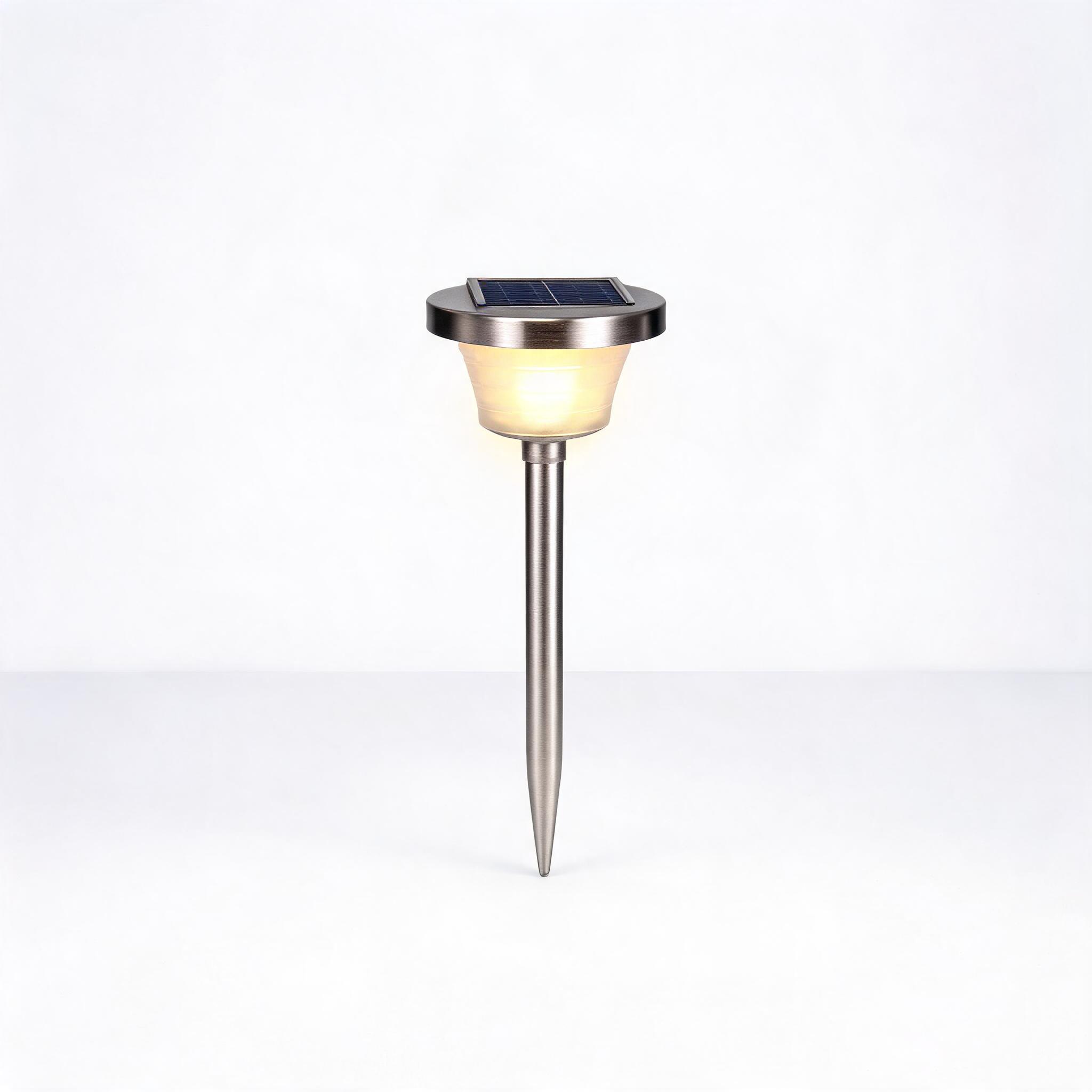
La vida útil de las luces solares para camino depende de la química de la batería, la calidad del LED y el material de la carcasa. Aprenda qué falla primero, qué acorta la vida y cómo especificar luminarias que duren más de 5 años.
La respuesta breve primero
Los compradores hacen esta pregunta porque ya han sido engañados: un juego de luces solares para camino que se veía muy bien en primavera y estaba muerto para el segundo verano. La respuesta honesta es que la vida útil de las luces solares para camino está determinada por tres componentes — la batería, el LED y la carcasa — y envejecen a ritmos muy diferentes. Una unidad bien construida con una batería de litio de calidad y carcasa de acero inoxidable 304 ofrece 3 a 5 años de rendimiento completo y 8 a 10 años de servicio útil. Una unidad barata de plástico con una celda de NiCd a menudo falla en 12 a 18 meses.
Comprender qué componente falla primero — y por qué — es lo que permite a los compradores comerciales especificar luces solares para camino que sobrevivan a proyectos reales en lugar de demostraciones de sala de exhibición.
Componente 1: La batería (vida útil de 2 a 4 años)
La batería es siempre el primer componente en degradarse. Las luces solares para camino suelen usar una de tres químicas:
- NiCd (níquel-cadmio): La opción más barata, propensa al efecto memoria y a 300–500 ciclos de carga. Espere de 1 a 2 años. Cada vez más restringida en la UE debido al contenido de cadmio.
- NiMH (níquel-metal hidruro): Mejor capacidad y 500–1000 ciclos, típicamente 2 a 3 años de servicio. Una opción razonable de gama media.
- LiFePO4 (fosfato de hierro y litio): Más de 2000 ciclos, estable en temperaturas extremas, 4 a 6 años de servicio. La especificación a exigir para proyectos comerciales.
Al evaluar a un proveedor, pregunte qué química tiene en su interior y si las baterías son reemplazables. Una luminaria con paquete de baterías reemplazable puede durar una década con dos cambios de batería; una unidad sellada con una celda de NiCd soldada es efectivamente desechable. Esta única pregunta separa la iluminación solar de grado profesional del producto de tienda de regalos.
Componente 2: El LED (vida útil de más de 50 000 horas)
El LED en sí rara vez es el factor limitante. Los paquetes de LED de calidad están clasificados para 50 000 horas — a 10 horas de funcionamiento por noche, eso es más de 13 años de servicio. Lo que sí degrada el rendimiento percibido del LED es la lente y el difusor: el acrílico barato se amarillea con la exposición a los rayos UV en dos temporadas, reduciendo la salida de luz aunque el LED siga funcionando. El policarbonato estabilizado contra UV o las lentes de vidrio evitan este modo de fallo por completo.
Componente 3: La carcasa y los sellos (vida útil de 5 a 10 años)
El material de la carcasa determina si el agua mata la electrónica antes de que la batería muera naturalmente. La cadena de fallos es conocida: una junta se comprime, entra agua, la placa de circuito se corroe y la luz muere — a menudo con una batería que aún conserva carga.
- Acero inoxidable 304 con sellado IP67: Sobrevive al rocío de riego, lluvia, nieve e inundaciones temporales. Nuestra luz solar para camino de acero inoxidable 304 está construida con este estándar para proyectos de hostelería y fincas.
- Carcasas de plástico con IP44: Los rayos UV agrietan la superficie en 1 o 2 veranos, las juntas fallan y el agua encuentra la placa. Esta es la luminaria que da mala reputación a la iluminación solar.
Qué acorta la vida útil en instalaciones reales
Incluso las luminarias buenas fallan temprano cuando se instalan mal. Los cuatro asesinos más comunes que vemos en el análisis de garantía:
- Sombra: Un panel que recibe solo 4 horas de sol en lugar de 8 nunca se carga por completo, lo que cicla profundamente la batería cada noche y reduce su vida aproximadamente a la mitad. Coloque los paneles lejos de la copa de los árboles y las sombras de los edificios.
- Agua estancada: Las luminarias instaladas en puntos bajos o zonas de drenaje de macetas permanecen en agua que eventualmente vence cualquier junta. Nivele el suelo o eleve la base de montaje.
- Abandono invernal: En climas helados, las baterías dejadas descargadas todo el invierno se sulfatan y pierden capacidad. O bien encienda las luces regularmente o retire las baterías fuera de temporada.
- Exposición a la sal: Los sitios costeros y con deshielo corroen el acero 304; el acero inoxidable 316 o el aluminio con recubrimiento en polvo es la especificación correcta allí.
Tiempo de funcionamiento vs. vida útil: dos preguntas diferentes
Los compradores a menudo confunden el tiempo de funcionamiento nocturno con la vida útil del producto. El tiempo de funcionamiento — cuántas horas permanece encendida la luz después del anochecer — depende de la carga de ese día y de la capacidad actual de la batería. Una unidad nueva de calidad ofrece de 8 a 10 horas; nuestra luz solar para camino con tiempo de funcionamiento automático de 8 a 10 h está especificada exactamente para esto. A medida que la batería envejece, el tiempo de funcionamiento se reduce primero: una unidad que funciona 5 horas en lugar de 9 le está diciendo que la batería está a media capacidad y debe programarse para reemplazo, no desecharse.
Cómo especificar luces solares para camino que duren
Para compradores comerciales — municipios, hoteles, asociaciones de propietarios, contratistas de paisajismo — esta lista de verificación convierte la pregunta de vida útil en una especificación de compra:
- Batería: Química LiFePO4, paquete reemplazable, capacidad indicada en mAh en la ficha técnica.
- Carcasa: Acero inoxidable 304 como mínimo, 316 para sitios costeros; clasificación IP67 con evidencia de prueba.
- Lente: Policarbonato estabilizado contra UV o vidrio, no acrílico desnudo.
- Panel: Silicio monocristalino, dimensionado para que un día completo de sol promedio cargue completamente la batería.
- Fotocélula: Conmutación automática de anochecer a amanecer, para que la luminaria no pueda dejarse encendida manualmente y descargarse profundamente.
- Repuestos: Pida de 5 a 10% de paquetes de baterías de repuesto con el envío inicial; cuestan poco y extienden la vida de la flota por años.
Costo total de propiedad: el número que importa
Una luz solar de plástico de $12 reemplazada cada 18 meses cuesta $8 por año de servicio, más la mano de obra para retirar y reinstalar unidades en una propiedad. Una unidad de acero inoxidable de $25 con un cambio de batería de $4 en el tercer año cuesta aproximadamente $5.50 por año — y se ve profesional todo el tiempo. Para cualquier propiedad administrada, la luminaria duradera gana en costo total de propiedad incluso antes de contar el valor reputacional de una iluminación que siempre funciona.
Preguntas frecuentes
¿Cuánto duran en promedio las luces solares para camino? Las unidades de grado consumidor duran de 1 a 2 años; las unidades de grado profesional con baterías LiFePO4 y carcasas de acero inoxidable ofrecen de 3 a 5 años a pleno rendimiento y de 8 a 10 años con reemplazo de batería.
¿Se pueden reemplazar las baterías en las luces solares para camino? En luminarias bien diseñadas, sí — el paquete de baterías se desliza o se desenrosca. En unidades selladas baratas, no, por eso son desechables. Pregunte antes de comprar.
¿Por qué mis luces solares se atenúan después de un año? Casi siempre es pérdida de capacidad de la batería, a veces combinada con una lente amarillenta o un panel sucio. Limpie el panel, y si el tiempo de funcionamiento sigue siendo corto, reemplace el paquete de baterías.
¿Funcionan las luces solares en invierno? Funcionan pero con menos horas, porque los días son más cortos y los paneles cargan menos. Las baterías LiFePO4 manejan el frío mucho mejor que las NiCd. En climas helados, mantenga los paneles libres de nieve y espere tiempos de funcionamiento de 4 a 6 horas.
¿Son las luces solares para camino lo suficientemente brillantes para propiedades comerciales? Para guía de caminos y definición de bordes, sí — 100 a 200 lúmenes es el estándar. Para seguridad o iluminación de acento, las luminarias cableadas siguen siendo la herramienta adecuada.
Elección de un proveedor
Si está obteniendo luces solares para camino para un proyecto o distribución, haga a cada proveedor las mismas tres preguntas: qué química de batería, qué clasificación IP con qué evidencia de prueba, y si la batería es reemplazable. Un fabricante como OKELI LIGHTING publica estas especificaciones abiertamente en cada página de producto — compare nuestros modelos solares para camino en blanco cálido y blanco frío , o explore la gama completa en la página de productos. Para más orientación de compra, consulte nuestra guía sobre cómo elegir luces solares para exteriores.