The best solar pathway lights are decided by four components: battery, panel, housing and control. A scoring framework, price-tier analysis and total cost of ownership math for serious buyers.
What 'Best' Means for Pathway Solar Lights
A search for 'best solar lights' returns consumer model lists ranked by price. This guide is written for a different reader: the buyer who specifies fixtures for a site, project, or product line, where 'best' means the lowest five-year total cost of ownership, not the lowest shelf price. That definition changes the comparison entirely, so let us build it up from the components.
The four components that define quality
Every solar light is an assembly of four subsystems, and the 'best' product is the one in which none of them was cut down on cost:
- Battery: LiFePO4 chemistry with 2,000+ cycles is the commercial benchmark. NiMH is acceptable for private residential use; NiCd is a red flag. A replaceable pack extends fixture life from 3 to 10 years.
- Panel: monocrystalline, sized to fully charge the battery in 6–8 hours of average sunlight. An undersized panel is the most common hidden defect: it drives the battery into deep discharge at night and halves its service life.
- Housing: 304 stainless steel with IP67 sealing for most sites; 316 steel for coastal areas and de-iced roads. Plastic housings are for temporary installations only.
- Control: automatic photocell dusk-to-dawn operation, so the fixture manages its own charge cycle and cannot be left discharged.
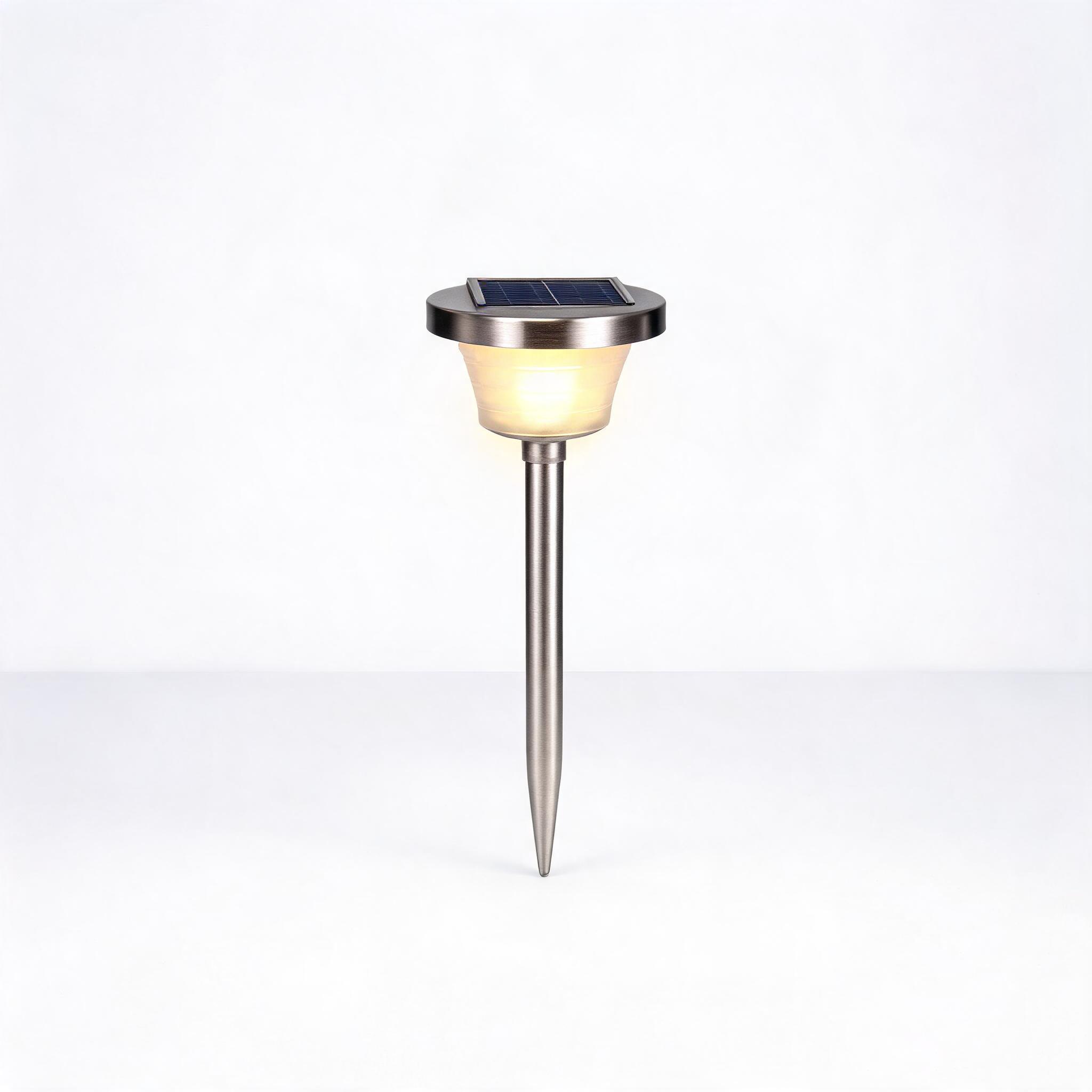
Our 304 stainless steel solar light (3000K warm white) and 6500K cool white version are built exactly to this benchmark: 30 cm height, IP67, automatic mode, which makes them convenient reference points when checking any supplier's claims.
The comparison framework: how to evaluate any solar light
Score each candidate against six criteria weighted for your application:
- Battery chemistry and replaceability (30%): the first component to fail. LiFePO4 + replaceable pack = maximum score.
- Housing material and IP rating (25%): 304 steel, IP67 is the minimum for commercial use; 316 for harsh conditions.
- Panel-battery match (15%): request both specifications and check that they match. A supplier who publishes both is a manufacturer; one who publishes neither is an intermediary.
- Luminous flux and color temperature (15%): 100–200 lm for pathways; 3000K for residential and hospitality landscapes, 6500K for modern designs.
- Honesty about runtime (10%): '8–10 hours' is a realistic figure on a full charge. 'All night, every night' is marketing.
- Warranty and spare parts (5%): 2+ years and the ability to order replacement batteries separately.
Warm white vs. cool white: a real decision, not a matter of taste
The choice between 3000K and 6500K is the most discussed one, so let us settle it through scenarios. Warm white (3000K) renders foliage, stone, and wood flatteringly and reads as HoReCa; it is the default for residential gardens, hotels, restaurants, and estates. Cool white (6500K) reads modern and precise; it suits contemporary architectural designs, security perimeters, and commercial campuses. The mistake is mixing both temperatures on one site; the right approach is to match the character of the site. We offer both warmand cool models, because both are legitimate specifications; the mistake is choosing out of habit rather than by site.
Price tiers: what you actually get
The market divides into three honest tiers:
- Under USD 10 (consumer/disposable): plastic housing, NiCd battery, no replaceable parts. Fine for a single decorative season; false economy for anything permanent.
- USD 10–25 (advanced consumer): mixed quality. Some units with 304 steel and NiMH; check every component, as this tier holds both good finds and traps.
- USD 25 and up (commercial grade): steel housing, IP67, LiFePO4, replaceable battery, automation. The tier where five-year total cost of ownership wins and where direct factory purchasing matters most: buying this tier at retail prices destroys the advantage that justifies it.
Total cost of ownership: the decisive math
Compare a USD 9 disposable unit replaced every 18 months with a USD 28 commercial unit with one USD 4 battery replacement in year three, over five years, on a site with 30 fixtures:
- Disposable: 30 fixtures × USD 9 × 3.3 replacement cycles ≈ USD 890 plus three rounds of installation labor.
- Commercial: 30 fixtures × USD 28 + 30 × USD 4 for battery replacement ≈ USD 960, once, with one installation.
The five-year totals are similar, but the commercial tier requires one installation instead of three, looks professional at all times, and never leaves a dark pathway. For maintained sites, this settles the question.
Where to buy: retail or direct from the factory
For quantities up to about ten units, retail is acceptable. For anything above 50 units, such as HOA renovations, hotel grounds, municipal pathways, or distributor lines, direct factory purchasing changes the economics. A manufacturer like OKELI LIGHTING supplies the commercial tier at wholesale prices with OEM/ODM options (custom heights, color temperatures, packaging, and logos), typically 40–60% below retail equivalents. Browse the full range on the products page and compare specifications directly.
Frequently asked questions
Which solar lights are best for commercial sites? Fixtures with a 304 steel housing, IP67 rating, replaceable LiFePO4 battery, and dusk-to-dawn automation. Anything below this specification is a consumer product with a commercial price tag.
Is warm or cool white better for solar lights? Warm white (3000K) for residential and hospitality landscapes; cool white (6500K) for modern architectural and security applications. Do not mix both temperatures on one site.
How much does a quality solar light cost? From USD 25 per unit at retail for genuine commercial grade; considerably less at direct-purchase wholesale prices.
Do the best solar lights really last longer? Yes, and the difference is concentrated in the battery and housing, which is why these two components carry 55% of the weight in our evaluation framework.
Can a custom specification be ordered for a project? Manufacturers with OEM/ODM capabilities can change height, color temperature, packaging, and branding. Ask early, as this affects tooling and lead times.
Build your shortlist
Apply the six-criteria score to your candidates, request panel and battery datasheets, and order samples of the top two before confirming volume. For a deeper understanding of the components, read our guides on solar light service life and on choosing outdoor solar lights, along with other purchasing guides in the news section.