
A buyer's guide to 3000K warm white vs 6500K cool white for landscape spotlights, bollard lights, solar pathway lights and LED string lights, with OKELI fixtures, specs and FAQ.
Ask a lighting contractor what mistake shows up most often on completed outdoor projects, and mixed color temperatures will be near the top of the list: a 6500K cool white pathway light next to a 3000K warm white bollard — on the same path, in the same photograph. Both fixtures may be well made, but the result looks like an accident rather than a design decision. This guide explains what 3000K and 6500K actually mean, where each value belongs in a landscape, and how the choice works across the four product categories that OKELI LIGHTING manufactures: landscape floodlights, bollards and post lights, solar pathway lights and LED string lights. If you are planning a wholesale order or a project with multiple fixture types, the sections below give you the specification checkpoints to settle before requesting a quotation.
What color temperature actually measures
Correlated color temperature (CCT), measured in kelvin (K), describes the visible color of the light a fixture emits. Lower values shift toward amber; higher values shift toward bluish white, “daylight.” In outdoor architectural lighting, 3000K is the accepted designation for warm white, and 6500K for pronouncedly cool white.
Two practical points matter when comparing fixtures. First, CCT says nothing about brightness. A 3000K bollard at 500 lm will light a path more effectively than a cool white fixture at 300 lm, so luminous flux is checked separately. Second, CCT is a specification, not a promise about how a site will look: surrounding surfaces, diffusers, and eye adaptation all affect how warm or cool a lit area appears. Always verify the stated CCT against product data, not photographs.
3000K warm white: where it belongs
Warm white is the default choice for hospitality and residential landscapes. At 3000K, foliage, wood, and stone are rendered in a natural, “evening” tone, which is why this temperature is standard for resort entrances, private estates, and intimate boutique courtyards.
In the OKELI range, both bollard models are supplied in 3000K warm white. The 40 cm bollard delivers 3 W and 300 lm through a tempered-glass diffuser with 120-degree distribution — a size for low garden borders, compact courtyards, and accessible paths. The 60 cm bollard steps up to 5 W and 500 lm for hotel walkways, driveways, and commercial areas. Both have 304 stainless steel housings, IP67 sealing, and an automatic dusk-to-dawn photocell; the two heights are intended for mixing in layered path lighting.
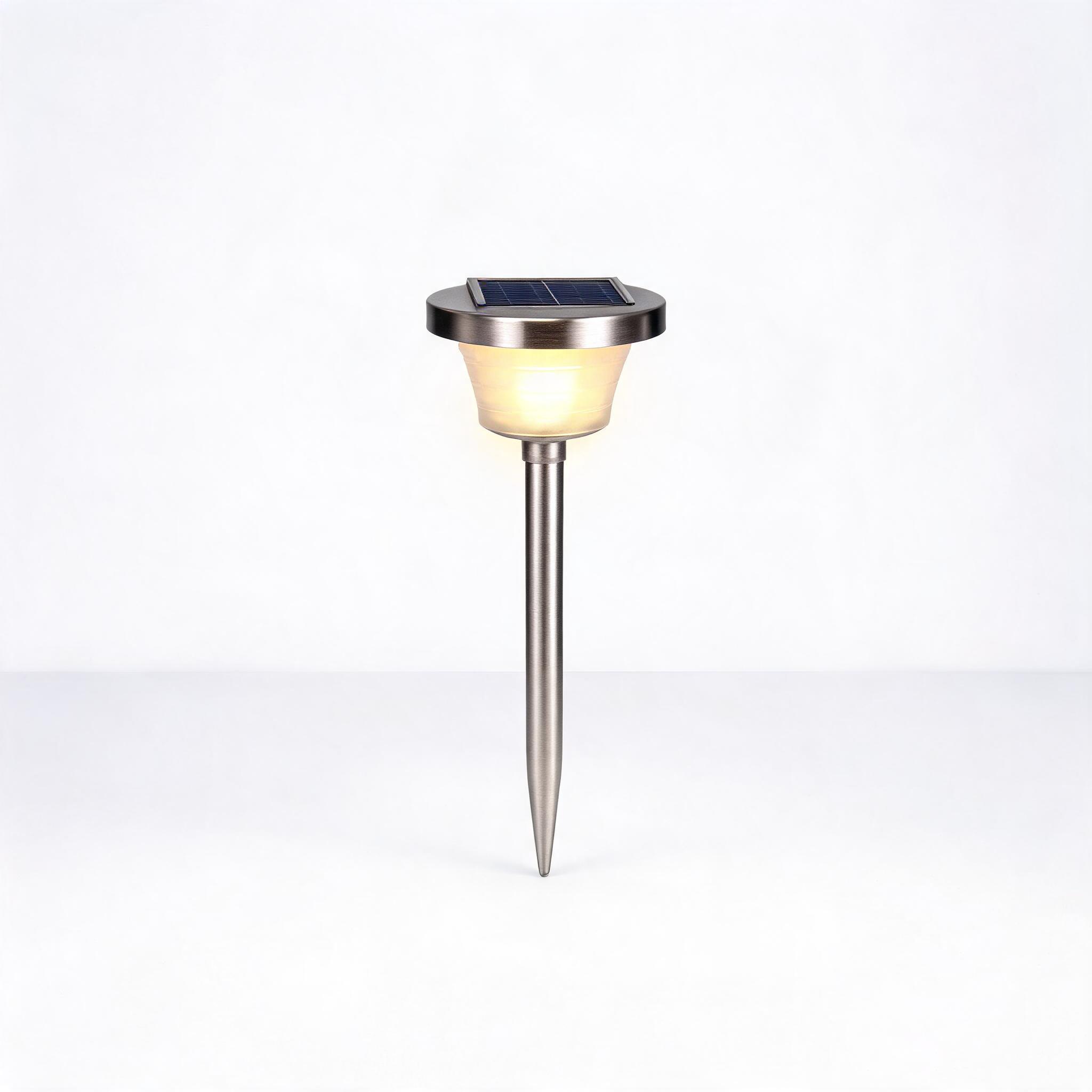
The warm white solar pathway light follows the same logic. It is a 30 cm fixture in 304 stainless steel with a 600 mAh NiMH battery that provides 8–10 hours of runtime per charge, IP67 sealing, and automatic on/off — no wiring and no electrician costs. Warm white suits it because path edges, flower beds, and seating areas around courtyards are viewed up close, where cooler light can feel “clinical.”
6500K cool white: where it performs better
Cool white has its own jobs. At 6500K, light reads as crisp and functional — modern architectural gardens, retail rows, display windows, and areas where a clean contemporary look or task visibility matters more than atmosphere.
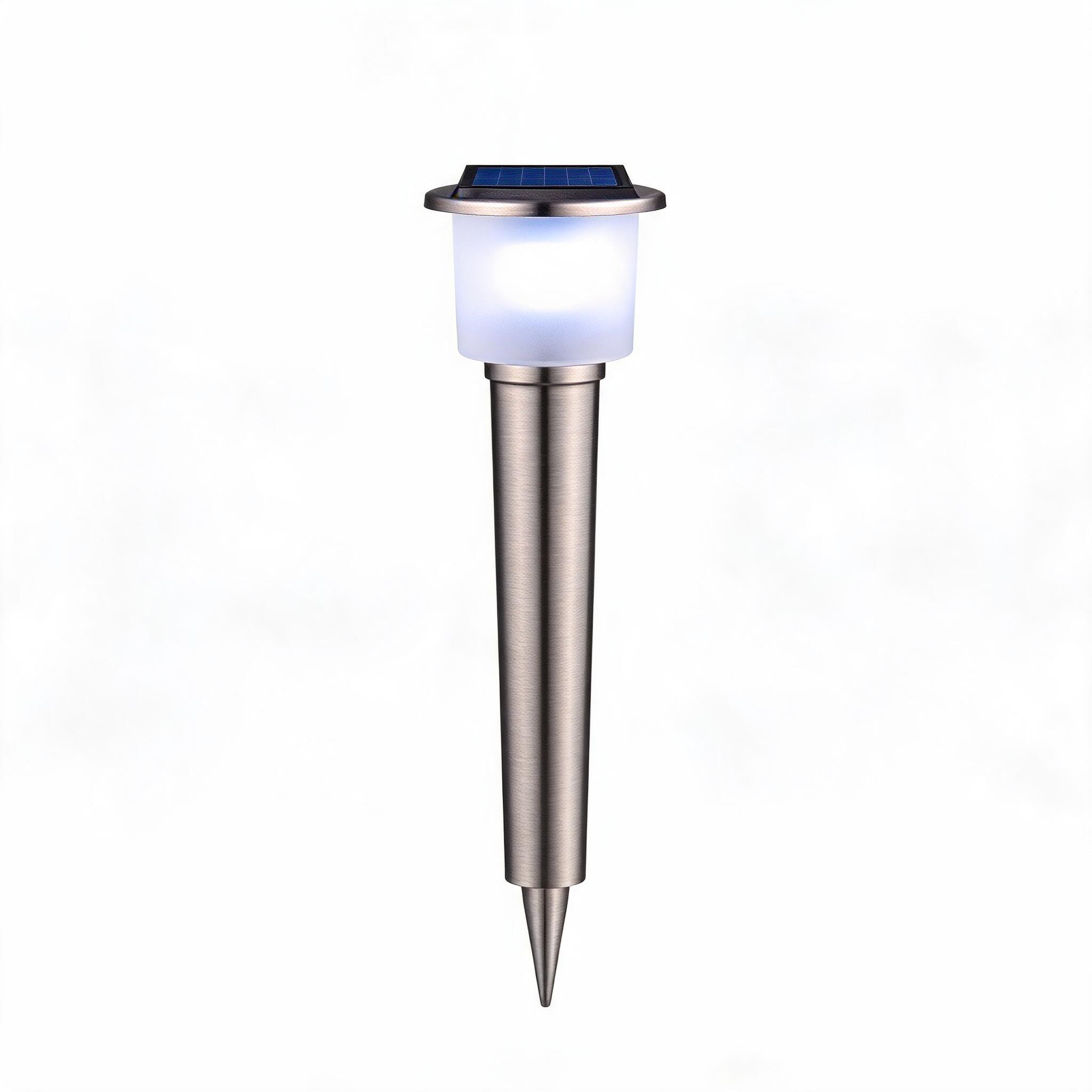
OKELI builds a matching product for this side of the choice as well. The cool white solar light targets modern gardens and functional path marking — the same 30 cm 304 stainless steel body, 8–10 hours of daily runtime, IP67 sealing, and an operating range of -10 °C to +50 °C. Cool white LED string light carries the same intent into suspended lighting: 10 m, 100 LEDs at 10 cm spacing, 50 W total, UV-resistant PVC cable, IP65 sealed connectors, built-in surge protection, direct 220 V connection, and linkable construction for long runs. It is specified for retail rows, display windows, and modern architectural gardens, while the identical warm white version is the recommendation for dining areas. The same housing construction and sealing, a different atmosphere — which is exactly why color temperature should be decided before ordering, not after installation.
3000K vs 6500K: side by side
| Aspect | 3000K warm white | 6500K cool white |
|---|---|---|
| Character of light | Soft white with an amber tint; renders “warm” materials naturally | Crisp white with a bluish tint; reads clean and functional |
| Typical locations | Resort entrances, estate gardens, dining areas, intimate courtyards | Modern landscapes, retail rows, display windows, functional paths |
| OKELI fixtures | 40 cm and 60 cm bollards, warm white solar light, warm white string light | Cool white solar light, cool white string light |
| Feel | Intimate, relaxing atmosphere at close range | Energy and contrast; accentuates modern “hard” surfaces |
The comparison above assumes comparable luminous flux. When two fixtures differ in both flux and CCT, brightness dominates the impression — so compare lumens first and color temperature second. Floodlight models are not included in the table because their color temperature is confirmed per model at order — see the floodlight section below.
Selecting color temperature by fixture category
Landscape floodlights
The OKELI floodlight range is built around luminous flux and beam control: a 10 W fixture at 800 lm for residential gardens and small signage, a 20 W fixture at 1600 lm (80 lm/W) as the workhorse for hotel grounds and plazas, and a commercial 50 W fixture at 4000 lm for large-scale accents and facades. All three have continuously adjustable 15°–60° beams, IP67 die-cast aluminum housings, and a built-in 220 V transformer. Because floodlights are aimed upward — at trees, facades, and signage — the first decisions concern beam angle and mounting distance. OKELI floodlight data includes flux, beam angle, and ingress protection class; the color temperature of the selected model is confirmed in the project specification at order, so state the required CCT when sending your request. Current specifications are on the pages for the 10 W floodlight and 20 W floodlight, and the top of the range is the commercial-grade 50 W.
Bollards and post lights
Both OKELI bollards are designed as 3000K warm white, with 120° diffuse distribution, 304 stainless steel bodies, IP67 sealing, and dusk-to-dawn operation. Choose the 40 cm model where a low visual line matters — garden borders, courtyards, accessible routes — and the 60 cm model where the fixture must mark a path edge at standard height. Mixing the two heights on one site is supported and is common in layered path lighting.
Solar pathway lights
In the solar light category the choice between 3000K and 6500K is most explicit, because OKELI builds both variants on one hardware platform: a 30 cm 304 stainless steel ground stake with a 600 mAh NiMH battery, 8–10 hours of runtime, IP67 sealing, and automatic dusk-to-dawn mode. Warm white is for hospitality and landscapes with “warm” materials; cool white is for modern schemes and functional marking. Both versions use one platform and require no wiring.
LED string lights
The string light category mirrors the pathway pair. Both versions are 10 m, 100 LEDs at 10 cm spacing, 50 W total, UV-resistant PVC cable, IP65 sealed connectors, surge protection, direct 220 V connection, and a linkable design for permanent installations in hotels, restaurants, and retail. Warm white is for dining areas and gathering places; cool white is for retail rows, display windows, and modern architectural gardens.
Practical notes for multi-category projects
- Set one color temperature per zone, not per fixture type. A path that combines bollards and solar stakes should be entirely 3000K or entirely 6500K — then the fixtures read as one system.
- Match the ingress protection class to the mounting location. OKELI bollards and solar lights are sealed to IP67, while string lights use IP65 sealed connectors — suitable for open terraces and canopies; for exposed coastal or damp enclosed installations, verify against the site conditions.
- Tie runtime expectations to the battery, not the fixture. Solar lights provide 8–10 hours per charge from a 600 mAh NiMH battery with automatic dusk-to-dawn mode; wired 220 V bollards and string lights run from mains power and are not tied to that figure.
Frequently asked questions
Can 3000K and 6500K be mixed on one site?
Yes, but by zone rather than by fixture. Different temperatures are acceptable between zones that are not viewed together; within one sightline, keep a single temperature so that paths, borders, and seating areas read as one coherent design.
Is 6500K brighter than 3000K?
No. Brightness is measured in lumens, not kelvin. A 500 lm bollard will light better than a 300 lm fixture at any color temperature. Compare flux for brightness and CCT only for tone.
Which color temperature should a hotel or resort choose?
3000K warm white is the hospitality standard for resort entrances, estates, and intimate courtyards; it is the temperature of the entire OKELI bollard range. It also renders plantings and “warm” materials most naturally at close range.
What color temperature do OKELI landscape floodlights have?
OKELI floodlight specifications include flux, beam angle, and ingress protection class; the color temperature of each model is confirmed at order. State the required CCT in the project specification or request so the correct configuration is matched to your order.
How long do the solar lights run each night?
Both models — warm and cool — provide 8–10 hours of runtime per charge from a 600 mAh NiMH battery and switch on/off automatically at dusk and dawn.
Can cool white string lights be used over a summer veranda?
Technically yes — the housing and sealing are identical — but the warm version is recommended for dining areas: cool white at seated eye level reads as functional rather than inviting. Reserve 6500K string lights for retail rows, display windows, and modern garden structures.
What should be confirmed before a wholesale order?
Determine the color temperature by zone, the ingress protection class by mounting location, and the expected daily runtime for solar positions. Then contact OKELI LIGHTING with your fixture list so that model data and wholesale terms can be matched to your actual volumes.
Plan your lighting project with OKELI LIGHTING
OKELI LIGHTING manufactures landscape floodlights, bollards and post lights, solar pathway lights and LED string lights in the above configurations of 3000K and 6500K, with direct factory supply for wholesale and project buyers. See the full catalog on the product page, find new guides on the news page, or start from the OKELI LIGHTING home page. To confirm the color temperature, lumen output, and configuration for a specific project, send us your fixture list, and our team will match the model specifications and wholesale terms to your volumes.