
A practical 2026 price breakdown for landscape lighting: fixture costs by type, transformer and wiring budgets, installation labor, and how to compare quotes from Chinese manufacturers like OKELI LIGHTING.
What buyers are really asking when they ask about landscape lighting costs
Every week, contractors, landscape designers, and developers ask us the same question: what does landscape lighting cost in 2026? The honest answer is that the final figure depends on four factors: the fixtures selected, the power system, installation costs, and the manufacturer. In this guide, we break down each tier with real numbers so you can budget your project before you request a quotation.
If you are buying fixtures direct rather than at retail, the numbers change dramatically. A 20 W LED landscape spotlight that costs $60–90 at retail in a major US store can be ordered direct from a factory, such as OKELI LIGHTING, at a fraction of that price when bought wholesale. Understanding both price tiers — retail and factory — is what separates a profitable lighting installation business from a loss-making one.
Fixture costs by type in 2026
Fixture prices vary more by build quality than by category. Here is how the market looks this year:
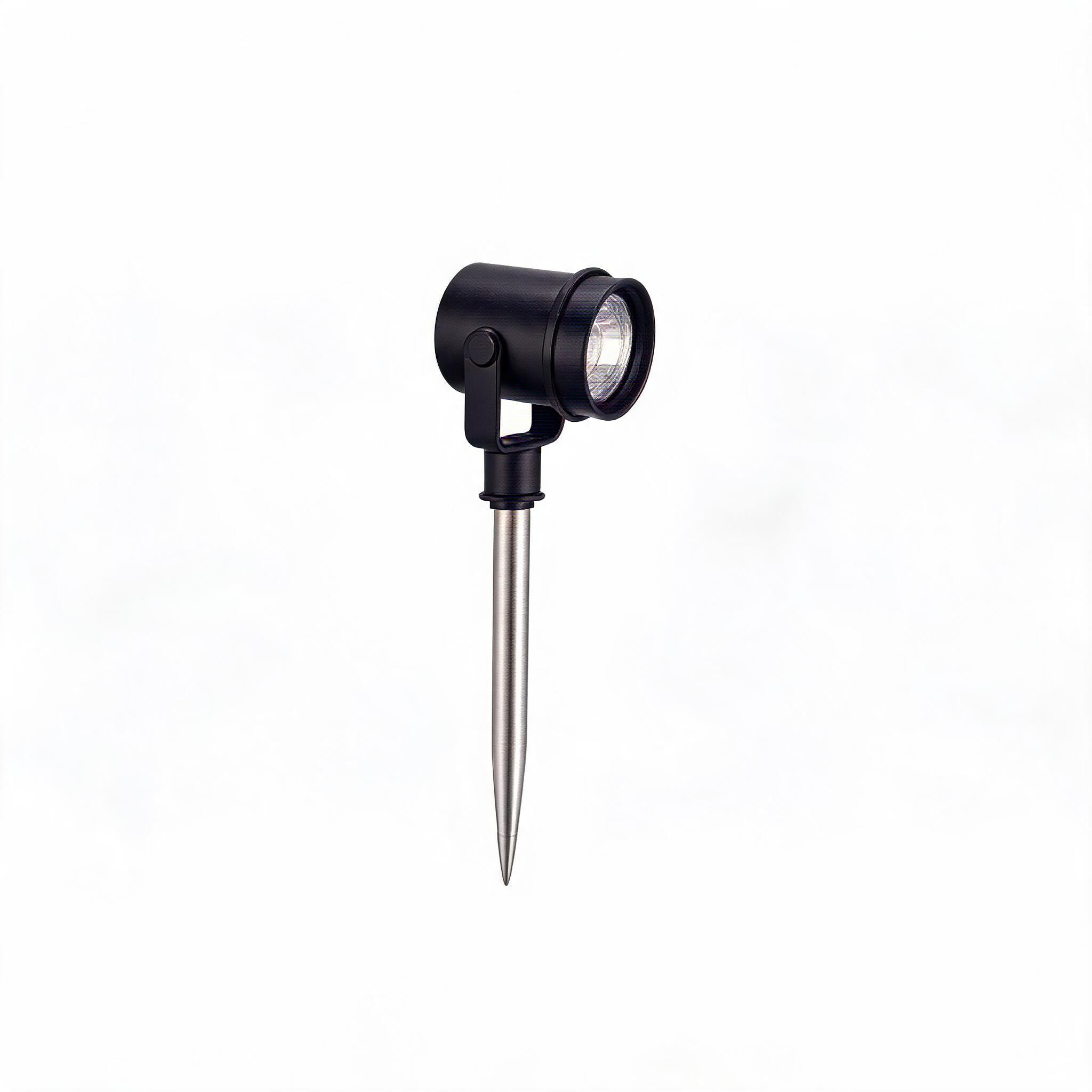
- Landscape spotlights: Retail $40–120 each. A die-cast aluminum 10 W spotlight with an adjustable 15°–60° beam angle sits at the low end; a commercial 50 W unit at 4,000 lumens sits at the high end. See our 10 W landscape spotlight and 50 W commercial spotlight for benchmark specifications.
- Bollards and path lights: Retail $50–150. Stainless steel construction with IP67 protection raises the price but significantly reduces warranty claims. Our 60 cm stainless steel bollard is a typical mid-range commercial specification.
- Floodlights: Retail $35–200 depending on wattage. A 30 W IP65 die-cast aluminum floodlight at 2,700 lumens covers most facade and perimeter lighting tasks.
- In-ground well lights: Retail $60–180. Tempered glass and a 316 stainless steel frame are essential for driveways that must withstand vehicle loads.
- Solar path lights: Retail $15–60. Quality varies widely; a 304 stainless steel solar light rated IP67 costs more upfront but survives seasons that kill cheap plastic alternatives.
Power system: transformers, wiring, and drivers
Fixtures are only half the budget. Low-voltage systems require a transformer sized at roughly the total fixture wattage plus a 20% margin. A typical residential project with 12 × 20 W spotlights needs a 300 W transformer, which retails for $80–250. 12/2 low-voltage cable costs about $0.30–0.80 per foot depending on copper prices, which have been volatile.
Line-voltage commercial installations do not need a transformer but require licensed electricians, conduit, and junction boxes — which often doubles the electrical line item. That is why many commercial buyers now choose fixtures with wide-range drivers (100–277 V AC) that simplify power design. When buying from a manufacturer, confirm whether the driver is a branded component or an unbranded equivalent; the difference shows up in failure rates within 18 months.
Installation: the largest line item
In the US market, professional installation runs $75–150 per hour per technician, or $100–300 per fixture installed. A 20-fixture residential project typically costs $2,500–5,000 in labor alone. Commercial projects are also priced per fixture, but trenches for in-ground lights and pole mounting for high-power floodlights add site-specific costs.
Solar lights change this math. Because they need no wiring, installation takes minutes per fixture — a real advantage for municipal pathways, parks, and hospitality sites where trenching through established landscaping is difficult or prohibited. Our 304 stainless steel solar path light was designed specifically for such trenchless installations.
Typical project budgets in 2026
- Small residential yard (8–12 fixtures): $1,800–4,500 turnkey, using 10–20 W spotlights and 4–6 path lights.
- Full residential yard (20–30 fixtures): $4,000–9,000 turnkey, a mix of spotlights, bollards, and step lights.
- Commercial property or HOA (50+ fixtures): $15,000–60,000+, usually to a lighting designer's plan with in-ground lights, wall lights, and bollard rows.
- Municipal solar pathway project: $80–200 per fixture turnkey, with no trenches and no electricity costs.
Where the money actually goes — and how to save it
In a typical turnkey project, roughly 30% is fixtures, 15% is power and wiring, and 55% is installation. The installation share is fixed for installers, but the fixture share is where distributors and installation companies earn or lose margin. Buying fixtures at retail for $70 each and reselling at cost yields nothing; sourcing the same specification direct from the factory changes the equation entirely.
This is the core argument for working directly with the manufacturer. OKELI LIGHTING produces die-cast aluminum spotlights, stainless steel bollards, solar path lights, and commercial string lights under one roof, with OEM and ODM support and wholesale prices typically 40–60% below retail equivalents. Browse the full range on our product pageto compare specifications side by side.
How to compare quotations as a buyer, not a consumer
When two quotations differ by 30%, the difference is almost always in the details. Compare these five points line by line:
- Housing material: Die-cast aluminum versus sheet metal versus plastic. Powder-coated aluminum resists corrosion for decades; thin sheet metal does not.
- Ingress protection: IP65 withstands rain; IP67 withstands temporary immersion. For in-ground and underwater lights, IP68 is the only acceptable rating.
- Rated LED lifetime: Reliable manufacturers state 50,000 hours based on LM-80 testing of the LED module, not a marketing figure.
- Driver brand: Request the driver datasheet. It is the component that most often fails first.
- Warranty terms: 2–5 years is standard for reputable factories. A warranty without a well-established claims process is worth little.
Cost calculation examples with real fixtures
Consider a hotel entrance renovation: six 20 W spotlights to uplight palms, eight 60 cm bollards along the drive, and four in-ground lights at the portico. At factory prices, the fixture package might cost $900–1,400 — whereas the same specification at retail would cost $2,500–3,500. The installer keeps the labor margin and gains room to compete in the tender.
Or a residential upgrade: ten 10 W spotlights with adjustable beam angles for garden accents, plus a 150 W transformer and 200 feet of cable. Fixtures sourced direct from the factory for this project cost less than the retail price of a single transformer.
Frequently asked questions
Does landscape lighting increase property value? Appraisers and realtors consistently note that professional exterior lighting improves appearance and the perception of safety, which supports the asking price. ROI is highest for properties listed for sale in the evening.
What is ultimately cheaper: solar or wired landscape lighting? Solar wins on installation cost (no wiring or transformer) and operating cost (no electricity). Wired wins on brightness and consistency. For pathways and borders, solar is usually cheaper overall; for uplighting mature trees, wired spotlights deliver intensity that solar cannot match.
How long do LED landscape lights last? Quality fixtures with 50,000-hour LEDs and sealed drivers last 10+ years in outdoor service. Weak points are gaskets and drivers, so housing design and driver quality matter more than the LED itself.
What is a realistic maintenance budget? Plan for annual lens cleaning and aiming adjustments, and budget 2–3% of fixture cost per year for replacement. Solar lights need battery replacement every 2–3 years depending on cell quality.
Getting a quotation from the factory
If you are buying for a project, an installation company, or distribution, send a request with the fixture list, target volumes, and destination port. A manufacturer such as OKELI LIGHTING can provide pricing, lead times, and OEM options within a few days. For more sourcing guidance, see our other guides in the news and blog section, or explore specific fixtures such as the 20 W adjustable-beam spotlight and 6 W stainless steel garden light.
The bottom line for 2026: fixture prices are stable, installation costs continue to rise, and the buyers who win are those who control fixture cost through direct factory sourcing. Know your specification, compare quotations on the five points above, and budget honestly for installation — the rest is detail.